Miku Hirano: AI From Inside Three Cabinets
Cinnamon AI co-founder Miku Hirano has sat on Cabinet councils under three prime ministers. At T4IS 2026 she spoke about what AI does to startup funding, the women-founder funding gap, and a bias she found in herself.
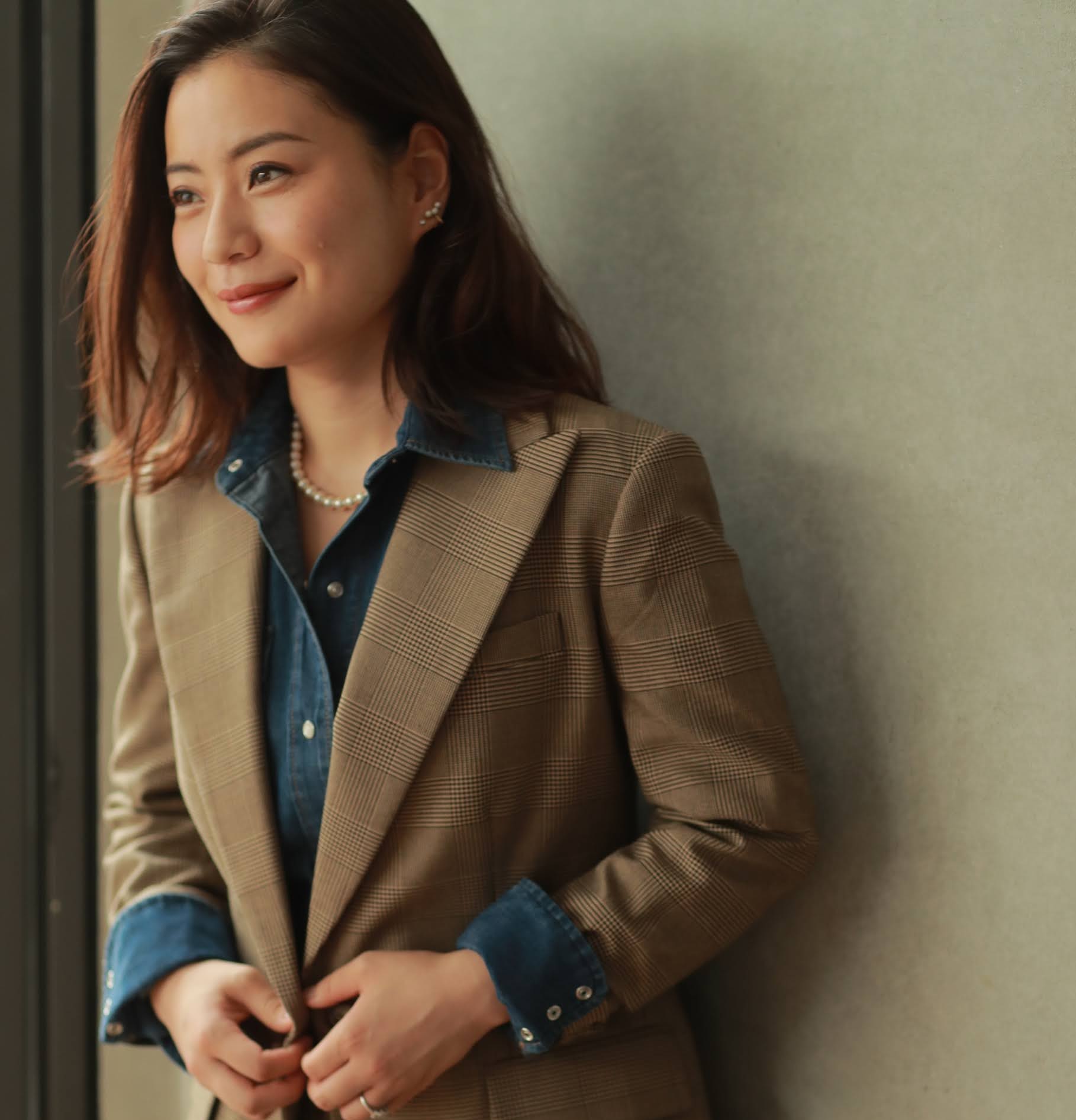
The line people quoted most from Miku Hirano’s session on the Tech for Impact Summit 2026 Main Stage had nothing to do with artificial intelligence. She had not planned to say it.
Two members of her sales team, one man and one woman, had missed their targets by about the same margin. Her reaction to each was different. About the man she thought: it is a shame he could not achieve the target. About the woman she thought: shouganai. It happens.
“This means I had gender discrimination toward them, and also toward myself,” she told the room. “Probably I discriminated against myself when I compared Cinnamon AI to other male-founded tech companies.”
She said this in front of investors, with a Bloomberg reporter moderating.
The engineer before the CEO
Hirano holds a master’s degree in artificial intelligence from the University of Tokyo. Her first company, Naked Technology, dates from the mobile era and was acquired by mixi, then one of Japan’s biggest social platforms.
In 2012 she co-founded Cinnamon in Singapore with Hajime Hotta. Cinnamon AI, the company that grew out of it, extracts structured, usable information from unstructured enterprise documents: contracts, invoices, medical records, insurance claims, engineering specifications. The paper and PDF that pile up in every large organisation and that no database was designed to read. Cinnamon’s current name for the problem is “Super RAG,” a retrieval-augmented generation approach built for documents that are hard to retrieve from.
Most enterprise AI projects stall because the organisation’s knowledge sits in formats the model cannot reach, rather than because of the model itself. Hirano has worked on that side of the problem for more than a decade.
AI and the cost of starting a company
The argument Hirano pushed hardest at T4IS 2026 was about what AI does to the economics of founding a company.
Starting a company in 2026 takes far less capital than it did in 2016, she said, because AI tooling cuts product development and back-office overhead at the same time. A one-person or “seed-strapped” startup is now a workable structure rather than a compromise.
Then, as the founder of a venture-backed company: “If I started a company right now, differently, I would do that. I would not need to raise money.”
The panel was about the funding gap facing female founders, and she drew out both sides. For founders whom venture capital systematically underfunds, needing less outside capital is a way around the gatekeepers. It also reduces the leverage of the venture model for everyone, she noted. If the unfairness gets cheaper to route around, the returns available to investors who back underpriced founders early may shrink with it.
The room was full of allocators.
Three cabinets
Hirano has served as a committee member on top-level Cabinet councils under Prime Minister Fumio Kishida and Prime Minister Shigeru Ishiba, the New Capitalism councils, and she described continuing on the growth-strategy side under Prime Minister Sanae Takaichi.
Under Kishida, half of the members of top-level Cabinet councils had to be women. Ishiba kept the rule. Under Takaichi, she said, the proportion has come down to roughly 30 to 40 percent, still far above where Japan sat before 2021.
What she wanted the room to notice was the knock-on effect. “Because if the top councils could do that, all the other councils got changed too,” she said. Committees lower down took their composition cues from the one above them, so a rule that applied to a handful of rooms at the top changed many more below without a separate fight for each.
Outside the day job
Hirano is an external director on the board of JGC Holdings, the global plant-engineering group. It is the kind of heavy-industry business whose documents Cinnamon AI spends its time trying to read.
She also founded Kamui Whisky, a craft distillery on Rishiri, a small island off the northern tip of Hokkaido.
She was selected to the World Economic Forum’s 2022 class of Young Global Leaders and received the Veuve Clicquot Business Woman Award, New Generation prize.
The session
Hirano appeared on the Tech for Impact Summit 2026 Main Stage on the “Women Building the Future” panel, with Miwa Seki of MPower Partners and Rika Nakazawa of NTT, moderated by Lisa Du of Bloomberg News. The full panel recap covers the capital-allocation data the session opened with, the boardroom-power discussion, and Hirano’s remarks in context.
In forty minutes the panel went from venture valuation data, to how corporate boards make decisions, to Cabinet-level quota policy, to a founder’s account of her own bias. That range is the reason T4IS programmes conversations rather than lectures and mixes business, policy and culture in each room.
About Tech for Impact Summit
Tech for Impact Summit is an invitation-only executive gathering in Tokyo, convening leaders across business, policy, and culture to deploy high-impact technology against humanity’s most urgent crises. The next edition takes place May 18–19, 2027. Miku Hirano spoke at the 2026 edition.
Explore the speaker roster or read our guide to SusHi Tech Tokyo 2027 to see how the wider innovation week fits together.
Attendance is by invitation. If you lead an organisation working at the intersection of technology and impact and would like to be considered for the 2027 gathering, you can register your interest. Every submission is read personally.
Learn more at tech4impactsummit.com.