The Mispricing of Female Founders — Women Building the Future (T4IS 2026)
Female founders raise 60% less capital but reach IPO 30% faster. The structural mispricing hypothesis and how venture capital misses talent.
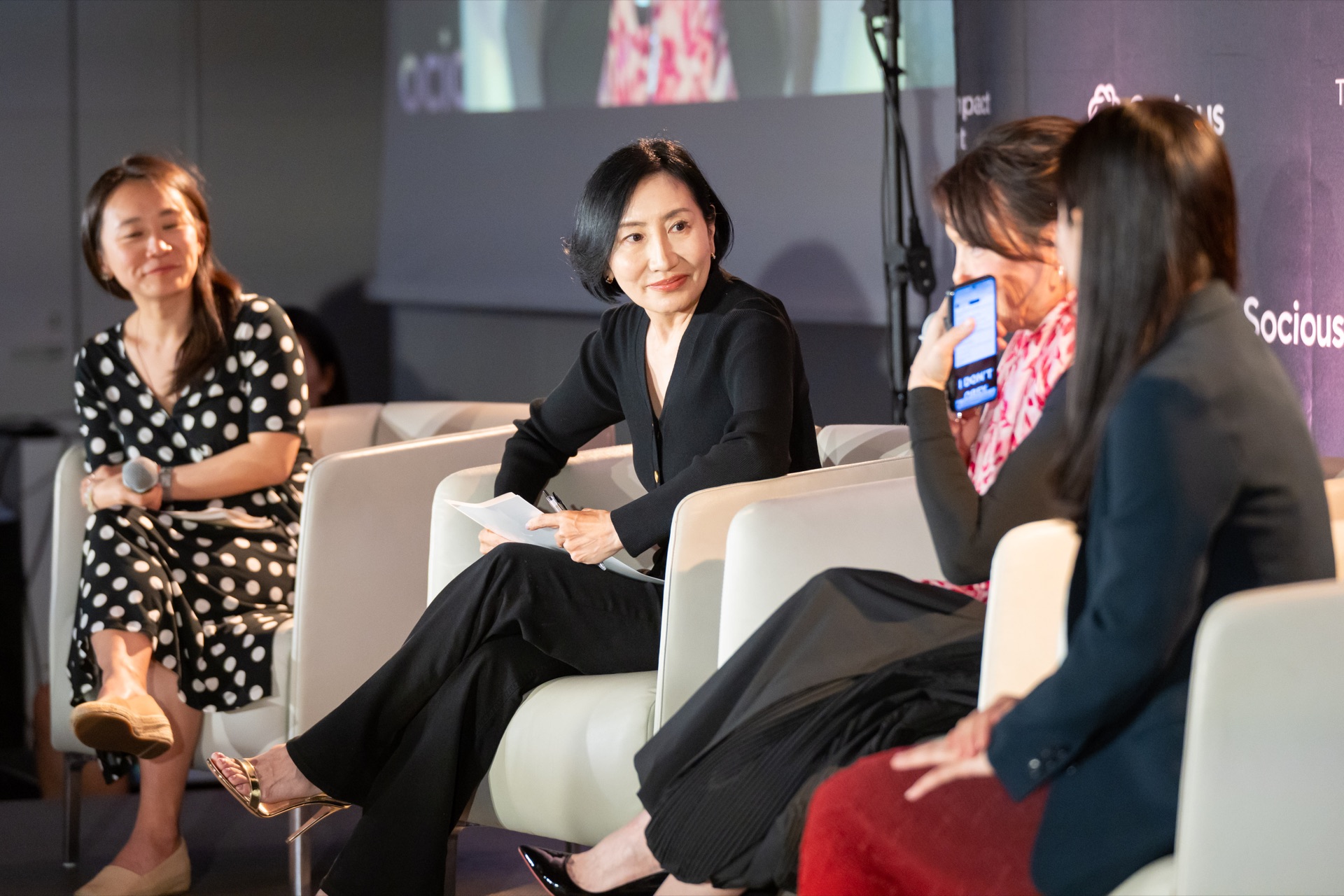
Miwa Seki, General Partner at MPower Partners, opened the afternoon panel at Tech for Impact Summit 2026 with numbers.
“Only 2% of total startup funding goes to female founders. If you look at the top 100 companies by capital raised, female founders account for 0.3%. Early-stage female-founded startups are valued at 0.4 times male-founded startups — a 60% discount. And yet exit valuations for female founders are 1.5 times higher, and they reach IPO 30% faster.”
Lisa Du, the Bloomberg News finance reporter moderating, paused on the implication. “It seems like the funding gap doesn’t impact outcome at all. In fact, some of the outcomes for females are much better.”
That gap between input and output is the investment thesis behind MPower Partners’ newly launched W Power Fund, and it set up the next forty minutes. The Main Stage panel, Women Building the Future, put three women with long careers in Japan’s tech and capital markets on stage to go through it.
Who Was on Stage
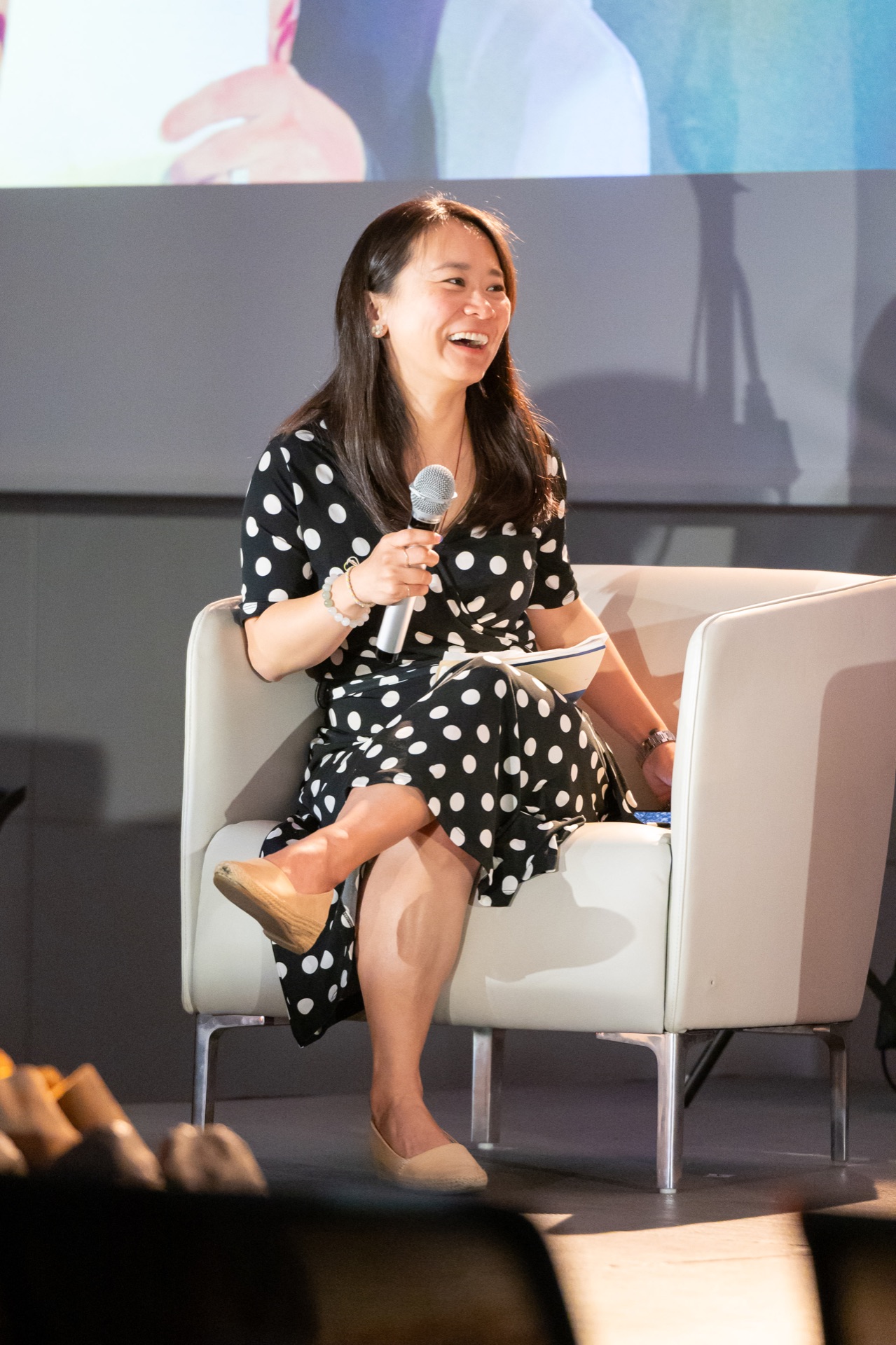
Miwa Seki (関美和) is a General Partner at MPower Partners Fund — Japan’s first ESG-focused global venture capital fund, which she co-founded in 2021 with Kathy Matsui and Yumiko Murakami. She serves as an outside director of ORIX Corporation, Daiwa House Industry, and Heralbony, and is the Japanese translator of Factfulness and other global non-fiction bestsellers. She holds an MBA from Harvard Business School.
Rika Nakazawa (中澤里華) is Chief Commercial Innovation at NTT, a Forbes 50 Over 50 (Innovation) honoree, and a doctoral candidate in Quantum and Organic Intelligence™ at a European computer science school. She is the author of Dear Chairwoman, a study of corporate board governance translated and republished in Japan by Diamond Publishing.
Miku Hirano (平野未来) is the founder and CEO of Cinnamon AI, an enterprise AI company she has scaled to roughly $30 million in cumulative funding raised. She serves as an outside director of JTC Group and is a committee member on the Japan Growth Strategy Council under Prime Minister Sanae Takaichi — having previously sat on the equivalent New Capitalism councils under Prime Ministers Kishida and Ishiba.
Lisa Du is a finance reporter at Bloomberg News in Tokyo and moderated the session.
The Mispricing Hypothesis
Seki’s opening data: a 60% valuation discount on the way in, 1.5x exit valuations on the way out, 30% faster to IPO. If female founders are priced below their outcomes, a fund that buys where the market underprices captures the spread.
“That’s the hypothesis we are basing on in our new fund,” Seki said, when Du raised the framing of “market mispricing.” MPower’s W Power Fund, launched to deploy capital specifically into female founders, is built to capture an inefficiency the rest of the venture industry has left open.
Seki broke the cause into parts. One of the largest is sectoral. Female founders concentrate in consumer-facing categories: retail, femtech, education, services, direct-to-consumer brands. Venture capital, especially in 2026, concentrates in AI, semiconductors, infrastructure, energy, and space — sectors where female founders are rare. Sector explains part of the gap.
Not all of it. “If you look at the same sector and compare male and female founders,” Seki added, “female founders are still discounted in terms of valuation, and they raise less within the same sector.” The discount survives a sector-for-sector comparison.
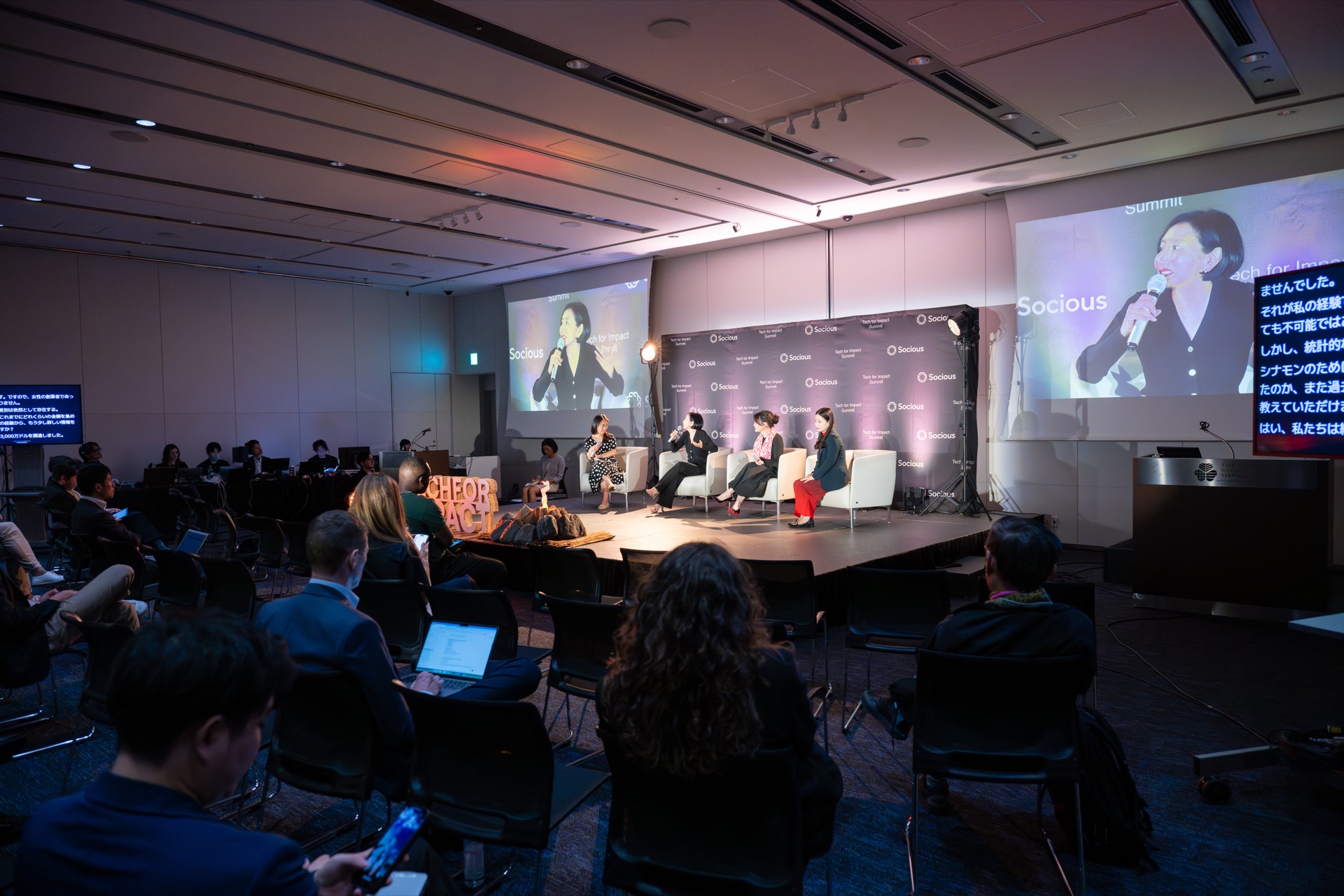
“I Discriminated Against Myself”
Near the end, Hirano told a story she said she had not planned to tell.
She described two members of her sales team — one male, one female — who had recently missed their targets by similar margins. Her internal reaction to each, she realized, was different. To the male salesperson she felt, it is a shame he could not achieve the target. To the female salesperson she felt, shouganai — it could happen, like that.
“This means I had gender discrimination toward them, and also toward myself,” Hirano said. “Probably I discriminated against myself when I compared Cinnamon AI to other male-founded tech companies. Even if we did not do that great, shouganai — it happens like that.”
She traced the reflex to childhood, to teachers and parents who told girls they were not as smart as boys. The message fades; the reflex stays, in how a founder rates her own company against peers and in how an investor rates her against male founders raising in the same sector at the same time.
So part of the 60% discount comes from founders anchoring their own asks low, not only from the investors across the table.
Boards, Sponsors, and the Men’s Room
Nakazawa’s segment moved from capital to governance. Three themes kept coming up in the interviews with women on public-company boards that went into her book Dear Chairwoman. The first was how hard women find it to ask for help, more so in Japan, where the norm against burdening others adds to it. The second was the difference between mentorship and sponsorship: a mentor advises you; a sponsor argues for you in rooms you are not in.
The third theme she illustrated with a story.
A woman she had interviewed was the first female director on a public-company board in Japan. By her second or third meeting she noticed that the men around the table seemed to know in advance how each other would vote. After some observation she identified the cause: decisions were being settled during bathroom breaks, in the men’s room, and at cigar nights the evening before the formal session.
“So she went and stood in front of the men’s room on the next board day,” Nakazawa said. “She said, ‘Can I come in? Can we have this conversation about whatever decision?’”
A board seat does not transfer power if the decisions are settled in rooms the new director cannot enter. That, in Nakazawa’s telling, is why quotas on their own fall short.
Seki added the corresponding data. On the Tokyo Prime Market — Japan’s senior board of roughly 1,600 listed companies — only 17 companies now have no women on their board. Average female board representation has reached 18%. The government is pushing for 30% by 2030. The head count has moved. Where the decisions get made, both panelists suggested, has moved less.
Three Prime Ministers, One Quota Policy
Hirano spoke from inside the policy process.
She has served on the top-level Cabinet councils under three successive Prime Ministers — Fumio Kishida, Shigeru Ishiba, and now Sanae Takaichi. The Kishida policy, she explained, was that half of the members on top-level Cabinet councils had to be women. Ishiba continued it. Under Takaichi the proportion has come down somewhat, to roughly 30 to 40 percent — still well above pre-2021 baselines.
“Because if the top councils could do that, all the other councils got changed too,” Hirano said.
Japan in 2026 also has, for the first time, a female Prime Minister (Takaichi), a female Finance Minister (Satsuki Katayama), and a long-serving female Tokyo Governor (Yuriko Koike). The shorthand Nakazawa offered: you cannot be it if you cannot see it. Nakazawa also argued that the wealth those leaders generate will eventually seed the next generation of woman-founded ventures, as Mira Murati’s $2 billion raise for Thinking Machines Lab, Daniela Amodei’s role at Anthropic, and Lucy Guo’s exit from Scale AI are doing in the United States.
The AI Reset
Hirano’s other point, and the one closest to the rest of the T4IS 2026 program, was AI.
Founding a company in 2026 requires far less capital than founding one in 2016 did. AI tooling collapses both product development and back-office overhead. The “seed-strapped” or one-person startup is now workable. For founders who get less venture money, that changes the math.
“If I started a company right now, differently, I would do that,” Hirano said. “I would not need to raise money.”
For the W Power Fund, and any thesis built on the funding-gap mispricing, this cuts both ways. AI lowers the floor for women founders shut out of venture capital. It also shrinks the role of venture capital for everyone, so the upside for investors who back women founders early may narrow as those founders need less outside money to scale.
What the Audience Took Away
Du closed by listing what the forty minutes had covered: capital allocation data, boardroom power, government policy, and a founder’s admission of her own bias. The action items: build the pipeline earlier (STEM education, university quotas, exposure to international networks); fund the underpriced (W Power and equivalents); move decision-making into rooms where the new directors sit; and design for AI-native company formation that removes the venture-capital chokepoint.
Hirano’s line stayed with the room. Some of the bias lives in the founders themselves.
How It Connects to T4IS 2027
T4IS 2027 will run more sessions on capital flows in Japan and the Asia-Pacific region, and the gap MPower is now pricing is one of the largest any allocator at the summit will encounter. Hirano’s point on AI-native company formation feeds into the 2027 sessions on agentic infrastructure and the post-venture company. Nakazawa’s boardroom-governance material carries into the impact-accounting and ESG-disclosure programming.
For background on the panelists, our pre-summit briefings on Japan’s gender gap as a capital allocation problem, the Womenomics-to-Founder-nomics fireside with Kathy Matsui, and the NTT communications-for-the-AI-era spotlight on Rika Nakazawa sit alongside this recap. Speaker pages: Miwa Seki, Rika Nakazawa, Miku Hirano, and Lisa Du.
About the Tech for Impact Summit
The Tech for Impact Summit is an invitation-only executive gathering in Tokyo, convening leaders across business, policy, and culture to deploy high-impact technology against humanity’s most urgent challenges. T4IS 2026 was held on April 26 at Tokyo Garden Terrace Kioi Conference, as a partner event of SusHi Tech Tokyo. The full Women Building the Future recording is available on the Tech for Impact Summit YouTube channel — search “Tech for Impact Summit” to watch the complete session.