Kiyoshi Seko: Fusion Energy From Science Fiction to Commercial Reality
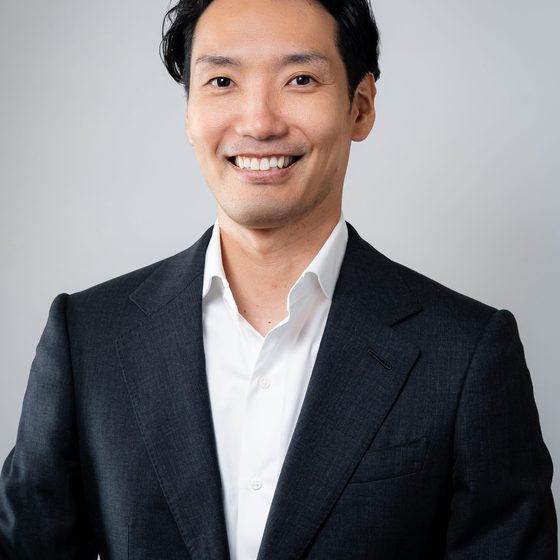
Kiyoshi Seko, COO of Kyoto Fusioneering, joins Tech for Impact Summit 2026 to discuss how Japan is building the critical infrastructure to make commercial fusion power a reality.
For decades, fusion energy occupied a peculiar position in the public imagination: perpetually promising, perpetually thirty years away. The joke became its own category of skepticism. Every generation of physicists declared that the breakthrough was imminent, and every generation of engineers discovered new reasons it was not.
That timeline has collapsed. In December 2022, the National Ignition Facility at Lawrence Livermore achieved fusion ignition for the first time in human history, producing more energy from a fusion reaction than the lasers used to trigger it. Commonwealth Fusion Systems began construction on SPARC, a compact tokamak designed to demonstrate net energy gain. Governments from the United States to South Korea to the United Kingdom announced multi-billion-dollar commitments to fusion development. Private capital followed: over $6 billion has flowed into fusion startups since 2021, a figure that would have seemed delusional a decade earlier.
But here is the part of the story that most headlines miss. Achieving a fusion reaction is not the same as building a fusion power plant. Between the plasma physicists who prove that fusion works and the grid operators who deliver electricity to homes and factories lies an enormous engineering gap — the thermal systems, the breeding blankets, the hydrogen recovery mechanisms, the heat exchangers that must operate reliably at temperatures exceeding 1,000 degrees Celsius under sustained neutron bombardment. This is not glamorous physics. It is the industrial plumbing of a new energy era. And no company in the world has committed to solving it more decisively than Kyoto Fusioneering.
Kiyoshi Seko, the company’s COO, will bring this perspective to the Tech for Impact Summit 2026 in Tokyo on April 26 — where fusion’s transition from laboratory achievement to commercial infrastructure will be a defining theme of the conversation.
The Engineering Challenge Nobody Talks About
The popular narrative of fusion focuses on plasma confinement: can you heat hydrogen isotopes to 150 million degrees Celsius and hold them in place long enough for atomic nuclei to fuse? That is the scientific question, and after decades of incremental progress, the answer is converging on yes. Tokamaks like ITER, JT-60SA, and SPARC are demonstrating that sustained fusion reactions are achievable at scale.
But a fusion reaction that produces heat is not yet a power plant. The heat must be captured, converted, and transmitted. The fuel — tritium, a hydrogen isotope so rare that only about twenty kilograms exist on Earth — must be bred inside the reactor itself, using lithium blankets that absorb neutrons and produce new tritium atoms in a self-sustaining cycle. The materials in contact with these systems must withstand conditions more extreme than anything in conventional nuclear, chemical, or aerospace engineering: relentless neutron flux that degrades metals at the atomic level, temperature gradients that would buckle most alloys, and radiation environments that make maintenance access extraordinarily difficult.
This is the domain Kyoto Fusioneering has claimed. Founded in 2019 as a spinout from Kyoto University’s Institute of Advanced Energy, the company designs and manufactures the components that sit between a working fusion plasma and a functioning power grid. Its product portfolio reads like the bill of materials for a technology that most people still consider theoretical: integrated blanket systems that breed tritium and extract heat simultaneously, heat exchanger technology rated for extreme thermal cycling, hydrogen isotope recovery systems, and plant engineering services that translate reactor physics into buildable, operable facilities.
It is, in essence, the infrastructure company for an industry that does not fully exist yet. That positioning is either visionary or premature, depending on whom you ask. The billions of dollars now flowing into fusion development suggest the former.
Japan’s Quiet Fusion Advantage
Japan does not always appear in Western media accounts of the fusion race, which tend to focus on American startups and European megaprojects. That omission understates Japan’s position considerably.
Japan has been a major contributor to fusion science for decades. The JT-60 tokamak, operated by the National Institutes for Quantum Science and Technology, set multiple world records for plasma performance before being upgraded to JT-60SA, which achieved its first plasma in late 2023 and is now the largest operational superconducting tokamak in the world. Japan is a core partner in ITER, the international fusion megaproject in southern France, contributing critical components including the superconducting magnets and remote handling systems. The country’s national fusion strategy, updated in 2023, explicitly targets a demonstration reactor by the 2030s and commercial deployment in the 2040s — a timeline more aggressive than many peer nations.
What distinguishes Japan’s approach is not just its physics capability but its manufacturing depth. Fusion reactors are not software. They are massive, precision-engineered physical systems that require supply chains capable of producing exotic materials, specialized alloys, and components machined to tolerances measured in microns. Japan’s industrial base — refined over decades of leadership in nuclear power, semiconductor equipment, automotive manufacturing, and advanced materials — is uniquely suited to this challenge.
Kyoto Fusioneering sits at the intersection of these advantages. The company draws on Japan’s academic fusion expertise and its industrial manufacturing capability, and it has been strategic about building international partnerships. Its collaboration with the UK Atomic Energy Authority gives it access to the UK’s aggressive fusion commercialization program. Its relationships with fusion developers in the United States, Europe, and Asia position it as a supplier to the entire emerging industry, not just a single national program.
Seko has been instrumental in building this global positioning. As COO, he oversees the commercial and operational strategy that has taken Kyoto Fusioneering from a university spinout to a company with international partnerships, significant venture funding, and a growing order book — in an industry where the first commercial power plants have not yet been built.
Why Fusion Matters Now: The AI Energy Crisis
The urgency of fusion has been amplified by a development that few in the energy sector anticipated even five years ago: the explosive growth of artificial intelligence and its staggering appetite for electricity.
Training a single large language model can consume as much electricity as a small city uses in a year. Data centers are projected to account for over ten percent of global electricity demand by 2030, up from roughly two percent today. Technology companies that have pledged carbon neutrality are discovering that their AI ambitions are fundamentally incompatible with existing clean energy supplies. Microsoft, Google, Amazon, and Meta have all signaled willingness to invest in novel energy sources — including nuclear and fusion — to power their next generation of infrastructure.
This is not a hypothetical future demand. It is a present crisis. Permitting delays for new transmission lines, grid interconnection backlogs, and the intermittency of solar and wind are constraining data center expansion today. The companies that solve the energy supply problem will determine the pace of AI development for the next two decades.
Fusion offers what no other energy source can: baseload power that is carbon-free, produces minimal long-lived radioactive waste, poses no risk of meltdown, and runs on fuel derived from seawater. A single fusion power plant could generate gigawatts of continuous, clean electricity — enough to power the most ambitious AI clusters imaginable. The fuel supply is essentially unlimited: deuterium extracted from ocean water and tritium bred from lithium, which is abundant in the Earth’s crust and in seawater.
The economic case is equally compelling. The global energy market is measured in trillions of dollars annually. If fusion achieves commercial viability, it does not merely compete with existing energy sources — it reshapes the entire cost structure of civilization. Every industry that depends on energy, which is to say every industry, faces a fundamental repricing of its inputs. For investors, this represents one of the largest market creation opportunities in human history.
From Laboratory to Grid: The Timeline
The question executives ask most often about fusion is: when? When will it actually produce electricity for the grid? The honest answer is that the timeline has never been shorter.
Multiple fusion developers have announced plans for demonstration plants in the late 2020s and early 2030s. Commonwealth Fusion Systems targets a demonstration of net energy gain with SPARC by the late 2020s, with a commercial pilot plant called ARC to follow. TAE Technologies, General Fusion, Helion Energy, and others are pursuing alternative approaches with their own aggressive timelines. ITER, the international tokamak, is designed to achieve sustained burning plasma — the milestone that proves fusion can generate industrial-scale heat.
But demonstration plants are not commercial power plants. The gap between proving that a reactor works and building a fleet of plants that reliably deliver electricity for decades is where Kyoto Fusioneering’s capabilities become critical. Someone must design the balance-of-plant systems. Someone must build the tritium breeding blankets that make the fuel cycle self-sustaining. Someone must engineer the heat exchangers that convert fusion heat into steam that drives turbines. Someone must validate these systems under the punishing conditions inside a fusion reactor.
That someone, increasingly, is Kyoto Fusioneering.
What He Will Discuss at T4IS 2026
At the Tech for Impact Summit, Seko is expected to address the state of fusion energy in 2026, the engineering challenges that will determine whether fusion becomes a commercial reality in the 2030s or the 2050s, and why Japan is positioned to lead this transition.
He joins a speaker roster that maps the critical intersections of technology, capital, and purpose. Former Minister Taro Kono brings the policy architecture of Japan’s energy and digital transformation. Cardano founder Charles Hoskinson offers the perspective of decentralized systems that could underpin new energy markets. GLOBIS founder Yoshito Hori delivers the keynote on entrepreneurial leadership. Kathy Matsui, general partner at MPower Partners, speaks to impact-driven venture capital — the kind of capital that fusion will need at scale. Jesper Koll of Monex Group anchors the financial markets narrative of Japan’s structural transformation. SmartNews CEO Ken Suzuki and Commons Asset Management’s Ken Shibusawa add dimensions of information architecture and patient capital.
What Seko brings to this assembly is the perspective of deep tech at its most consequential. Fusion is not an incremental improvement to existing energy systems. It is a discontinuity — a technology that, if successfully commercialized, changes the boundary conditions of human civilization. The executives in the room will be grappling with questions about AI infrastructure, climate commitments, energy security, and long-term capital allocation. Fusion sits at the intersection of all of them.
The Trillion-Dollar Question
There is a reason that the world’s most sophisticated investors — sovereign wealth funds, deep-tech venture firms, the strategic investment arms of energy majors — are placing bets on fusion despite the technical risk. The downside is the loss of invested capital. The upside is participation in the creation of the single most transformative energy technology since the discovery of fire.
For executives and allocators, the strategic question is no longer whether fusion will work. The physics is increasingly settled. The question is who will build the infrastructure — the reactors, the fuel systems, the thermal conversion technology, the supply chains — and how fast. That question has a more tangible answer now than at any point in the history of the field. Companies like Kyoto Fusioneering are building it today.
Understanding where fusion stands, what it requires, and how Japan’s industrial and scientific capabilities position it as a leader in the commercialization race is not speculative futurism. It is strategic due diligence for any leader whose decisions extend beyond the current decade.
The Tech for Impact Summit 2026 takes place on April 26 in Tokyo. Seats are limited and allocated by invitation. Request your invitation to join Kiyoshi Seko and other global leaders building the technologies and systems that will define 2050.