瀬古紀善:核融合エネルギー、SFから商業化の現実へ
京都フュージョニアリングCOOの瀬古紀善がTech for Impact Summit 2026に登壇。日本がいかにして商業核融合を実現するための重要インフラを構築しているかを語る。
The old joke about fusion power is that it has been thirty years away for fifty years. Physicists kept announcing the breakthrough was near; engineers kept finding reasons it was not.
In December 2022 the National Ignition Facility at Lawrence Livermore achieved ignition for the first time: a fusion reaction that gave back more energy than the lasers put in. Commonwealth Fusion Systems began building SPARC, a compact tokamak meant to show net energy gain. The United States, South Korea and the United Kingdom each announced multi-billion-dollar fusion programmes. Private investors put more than $6 billion into fusion start-ups after 2021.
A reaction is still a long way from a power plant. Between the plasma physicists and the grid operator sit the thermal systems, the breeding blankets, the hydrogen recovery units and the heat exchangers, all of which have to run for years above 1,000 degrees Celsius under constant neutron bombardment. Kyoto Fusioneering builds those parts.
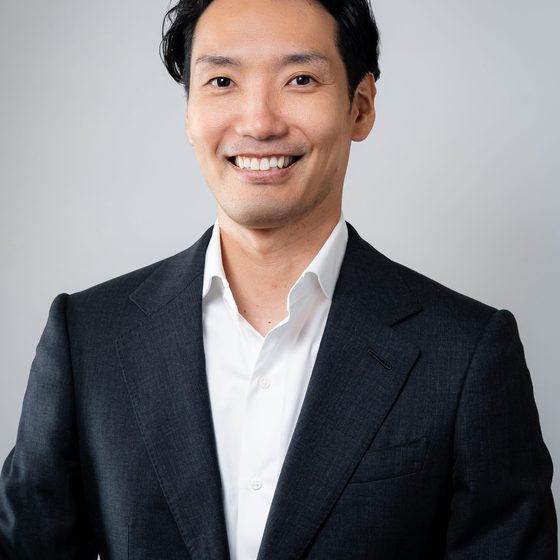
Kiyoshi Seko, the company’s COO, speaks at the Tech for Impact Summit 2026 in Tokyo on April 26.
The Engineering Between Plasma and Grid
Public attention goes to plasma confinement: heating hydrogen isotopes to 150 million degrees Celsius and holding them long enough for nuclei to fuse. After decades of work, tokamaks such as ITER, JT-60SA and SPARC are showing that sustained fusion reactions can be achieved at scale.
Heat from a reaction still has to be captured, converted and sent out. The fuel, tritium, is so scarce that only about twenty kilograms exist on Earth, so a plant has to breed its own inside lithium blankets that absorb neutrons and give off new tritium. The materials around those systems face a neutron flux that degrades metal atom by atom, temperature gradients that would buckle most alloys, and radiation levels that make maintenance access very hard.
Kyoto Fusioneering was founded in 2019 as a spinout from Kyoto University’s Institute of Advanced Energy. It designs and manufactures the components between a working plasma and a working grid: integrated blanket systems that breed tritium and extract heat at the same time, heat exchangers rated for extreme thermal cycling, hydrogen isotope recovery systems, and plant engineering services that turn reactor physics into a facility someone can build and run.
Japan’s Position
Western coverage of fusion tends to feature American start-ups and European megaprojects and to leave Japan out.
The JT-60 tokamak, run by the National Institutes for Quantum Science and Technology, set several world records for plasma performance. Its successor, JT-60SA, achieved first plasma in late 2023 and is now the largest operating superconducting tokamak in the world. Japan is a core partner in ITER in southern France, supplying superconducting magnets and remote handling systems among other components. The national fusion strategy, updated in 2023, targets a demonstration reactor in the 2030s and commercial deployment in the 2040s, a faster schedule than many peer countries have set.
Japan also has the factories. A fusion reactor is a large, precision-built physical system that needs suppliers of exotic materials, specialised alloys and parts machined to micron tolerances. Decades in nuclear power, semiconductor equipment, automotive manufacturing and advanced materials have left Japan with that supply chain already in place.
Kyoto Fusioneering draws on both the academic base and the industrial one, and has built partnerships abroad. Its collaboration with the UK Atomic Energy Authority connects it to the UK’s commercialisation programme. Relationships with fusion developers in the United States, Europe and Asia make it a supplier to the whole emerging industry rather than to one national project.
Seko oversees that commercial and operational strategy as COO. Under it the company has gone from university spinout to international partnerships, significant venture funding and a growing order book, before any customer has a commercial plant to put the parts in.
Why Now: AI’s Appetite for Power
Training one large language model can use as much electricity as a small city consumes in a year. Data centres are projected to account for over ten percent of global electricity demand by 2030, up from roughly two percent today.
Technology companies with carbon-neutrality pledges are finding that those pledges and their AI plans do not fit inside the clean power available. Microsoft, Google, Amazon and Meta have all signalled willingness to back new energy sources, including nuclear and fusion, for their next wave of infrastructure. Transmission permitting delays, interconnection queues and the intermittency of solar and wind are already holding back data centre construction.
Fusion’s attraction is a combination no other source offers: carbon-free baseload power, minimal long-lived radioactive waste, no meltdown risk, and fuel derived from seawater. One plant could produce gigawatts of continuous output, enough for the largest AI clusters anyone has proposed. Deuterium comes from the ocean; tritium is bred from lithium.
The global energy market runs to trillions of dollars a year. A working commercial plant would change the price of energy for every industry that uses it. Investors are sizing their bets against that market.
From Laboratory to Grid
The question executives ask most is when fusion will put electricity on the grid. Several developers have announced demonstration plants for the late 2020s and early 2030s. Commonwealth Fusion Systems aims to show net energy gain with SPARC by the late 2020s and to follow it with a commercial pilot plant called ARC. TAE Technologies, General Fusion, Helion Energy and others are pursuing different approaches on their own schedules. ITER is designed to reach sustained burning plasma, the milestone that proves fusion can generate industrial-scale heat.
A demonstration plant is still not a fleet of commercial plants running for decades. Someone has to design the balance-of-plant systems, build the tritium breeding blankets that close the fuel cycle, engineer the heat exchangers that turn fusion heat into steam for turbines, and test all of it under reactor conditions. Kyoto Fusioneering has taken that work on.
What He Will Discuss at T4IS 2026
Seko is expected to cover the state of fusion in 2026, the engineering problems that will decide whether commercial fusion arrives in the 2030s or the 2050s, and why Japan is placed to lead.
The programme also features former Minister Taro Kono, Cardano founder Charles Hoskinson, GLOBIS founder Yoshito Hori (keynote), Kathy Matsui of MPower Partners, Jesper Koll of Monex Group, SmartNews CEO Ken Suzuki and Ken Shibusawa of Commons Asset Management. Kono covers Japan’s energy and digital policy; Matsui covers the venture capital that a fusion supply chain will need; Shibusawa covers patient, multi-generational capital.
Many of the executives attending are deciding how to power AI infrastructure while meeting climate commitments. Seko’s company already ships hardware for one of the few energy sources that could do both.
The Investment Question
Sovereign wealth funds, deep-tech venture firms and the investment arms of energy majors have put money into fusion with full knowledge of the technical risk. Their bet is that the first commercial plants get built, and that the companies supplying blankets, heat exchangers and fuel systems to them will be hard to replace. Kyoto Fusioneering is one of those suppliers.
The Tech for Impact Summit 2026 takes place on April 26 in Tokyo. Seats are limited and allocated by invitation. Request your invitation to join Kiyoshi Seko and other global leaders building the technologies and systems of 2050.