Cross-Border Capital Is Flowing Into Japan. The Valuation Gap Hasn't Caught Up.
A $550B US-Japan investment fund and a record $2.65B AI valuation both landed in 2025. Japanese deep tech still raises at lower valuations than comparable US companies, and this briefing looks at why.
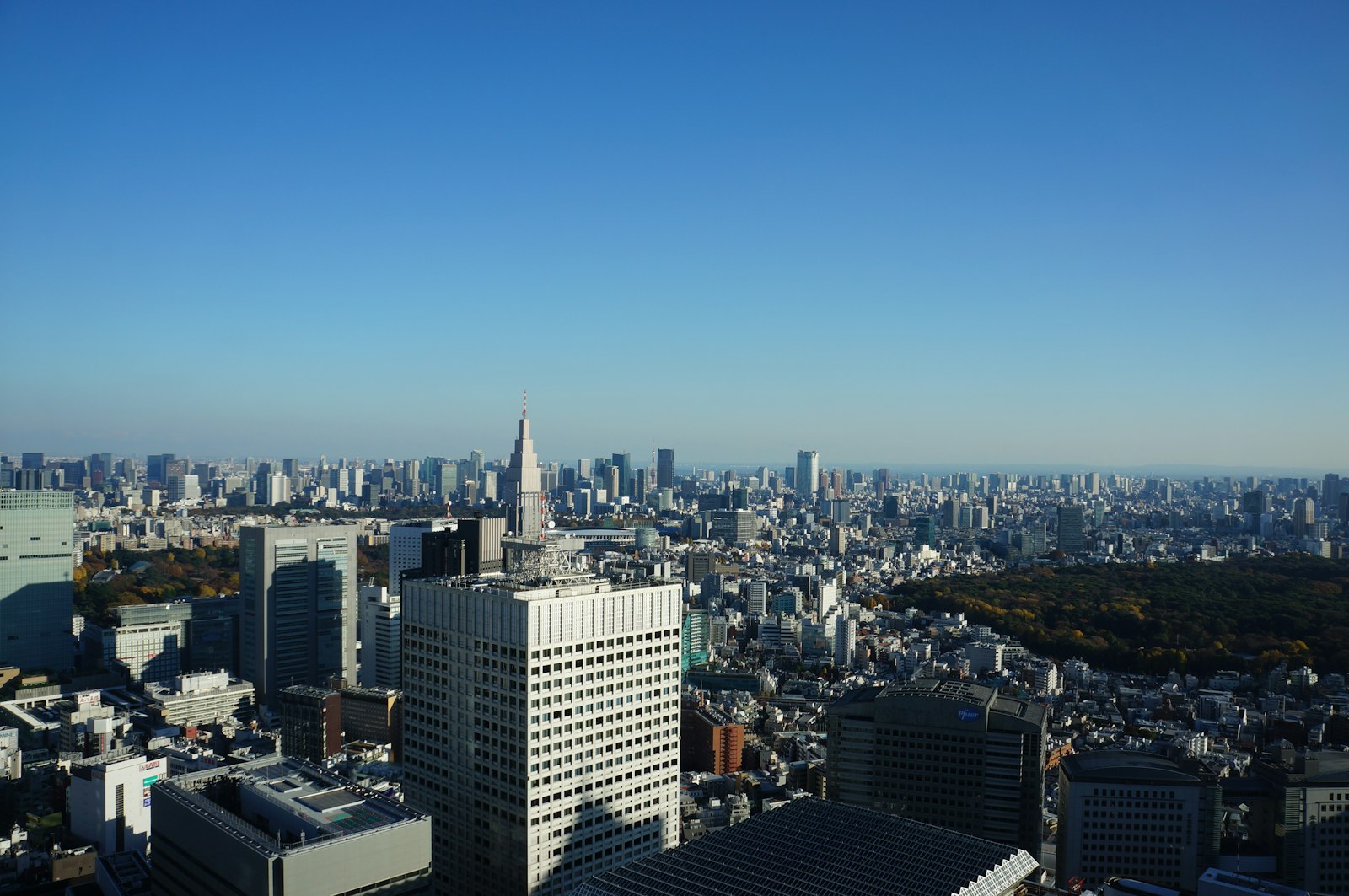
In September 2025, Japan and the United States signed a memorandum of understanding committing Japan to $550 billion in US-directed investment across semiconductors, pharmaceuticals, critical minerals, energy and shipbuilding. The money runs through the Japan Bank for International Cooperation and Nippon Export and Investment Insurance, and the full amount is due before the current US administration’s term ends in January 2029 (Bloomberg). Two months later, a Tokyo AI lab founded by three former Google researchers closed a $135 million round at a $2.65 billion valuation, the highest ever recorded for an unlisted Japanese company (TechCrunch).
Whether Japanese founders in general now raise at US prices is a separate question from either number, and 2025 left it open.
What flows through a $550 billion fund
The September MOU is a government-to-government instrument. An investment committee chaired by the US Commerce Secretary recommends projects; the final call sits with the White House. Japan finances its side through JBIC and NEXI, public-sector lending and insurance vehicles. The sector list is chips, pharma, critical minerals, energy and shipbuilding. Nothing in it is scoped as early-stage deep tech investing, and the governance looks nothing like a venture fund picking a company.
$550 billion moving between two governments does not move a term sheet closer to a Japanese founder. It pays for fab capacity, grid capacity and mineral supply. The capital that prices a startup comes from venture funds.
Sakana AI, and why it is still one name
Sakana AI’s round shows a Japanese company can clear $2.5 billion in under two years with a cap table that spans Japan’s MUFG alongside Khosla Ventures, NEA and Lux Capital. As of its close, it is also the only Japanese private company at that valuation.
Tech for Impact Summit’s 2026 “Capital Without Borders?” Strategy Dialogue took that gap as its subject. The private session convened investors who deploy across the US, Europe and Japan corridors, including Masaru Sakamoto, Partner at Benhamou Global Ventures, an early-stage investor in Bedrock Robotics, Glydways, Ekso Bionics and a wider portfolio of deep tech names. The session’s public brief stated the pattern plainly: Japanese startups with world-class IP routinely draw lower valuations than comparable US peers, even as tariff negotiations, export controls and a $550 billion capital corridor change the surroundings. The dialogue was invitation-only and off the record, so this piece draws on the published session brief and Sakamoto’s public role, and on nothing said in the room.
Why the gap persists
Start with where the $550 billion goes. It flows through JBIC, NEXI and a US-side investment committee. None of those bodies negotiates term sheets. A founder raising a Series A cannot receive any of it, however closely their sector matches the stated priorities.
Then the comparables. A valuation discount narrows when enough deals clear at higher marks that the next deal has something to point to. A Japanese AI founder’s lawyer can now cite Sakana AI’s $2.65 billion in a negotiation, but that is one comparable, where a US founder has many priced deep tech rounds to anchor to.
And the diligence itself runs on people. Sakamoto’s background is typical of who does it: Keio, Harvard Business School, years in leadership roles at NEC, board seats on both US and Japanese startups. Most investors working the corridor are individuals fluent in both markets rather than funds running a quantitative screen, so deal flow is limited to what that small group can personally cover.
Going into 2027
The capital commitment and the Sakana AI round are real signals. They show the money is arriving. They do not show that Japanese founders are being priced the way US founders are.
The summit’s Strategy Dialogue format exists for this kind of open structural question. It puts investors who work the US-Europe-Japan corridor in a room with Japanese founders and the policymakers who set the rules they raise under. Cross-border capital formation will be one of the dialogue tracks again at the 2027 edition, including the individual investors who carry most of the US-Japan deal flow.
Search Tech for Impact Summit to follow the 2027 program as sessions are announced.