Yat Siu: Why Gaming and Digital Property Rights Are the Future of Ownership
Yat Siu, Animoca Brands co-founder, joins Tech for Impact Summit 2026 to discuss digital property rights, Web3 gaming, and why Japan is leading the ownership revolution.
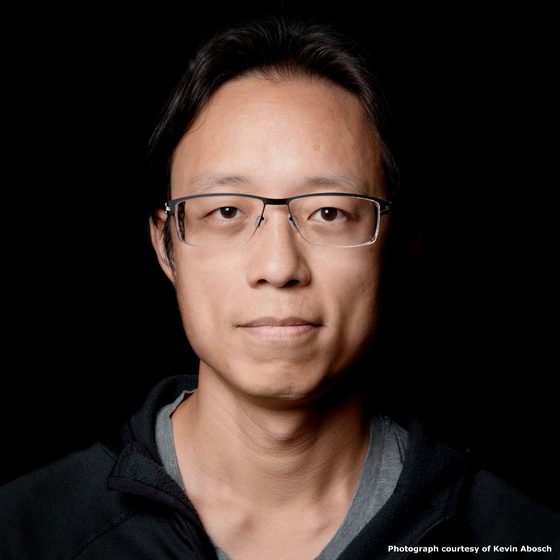
You have spent thousands of hours in digital worlds. You have purchased skins, earned rare items, built virtual estates. But here is an uncomfortable truth: you own none of it. Every digital asset you have ever acquired in a traditional game exists at the discretion of a platform operator who can revoke it, devalue it, or shut down the server entirely. In an era when digital life is indistinguishable from economic life, the absence of property rights in virtual environments is not a design quirk — it is a structural failure.
Yat Siu has built his career around fixing that failure. As co-founder and executive chairman of Animoca Brands, he has assembled one of the most consequential portfolios in the digital ownership economy — and he is bringing that vision to the Tech for Impact Summit 2026 in Tokyo on April 26.
From Vienna to the Vanguard of Digital Ownership
Siu’s path to becoming one of Web3’s most influential figures is anything but conventional. Born in Vienna in 1973 to a Taiwanese mother who conducted orchestras and a Hong Kong father who had traded the concert stage for business, he trained as a classical musician before joining Atari Germany at seventeen. That early collision of culture, technology, and play would define his career.
After relocating to Hong Kong in 1995, Siu founded Freenation, Asia’s first free web page and email provider, followed by Outblaze, a multilingual cloud services company whose messaging division he sold to IBM in 2009. Each venture sharpened an instinct for identifying the infrastructure layers that most people take for granted — until they disappear.
In 2014, he co-founded Animoca Brands. What began as a mobile gaming studio evolved into something far more ambitious: a global platform company with a stated mission to deliver digital property rights to the world’s gamers and internet users. Today, Animoca’s portfolio spans more than 600 Web3 investments and partnerships, including The Sandbox, one of the most recognized metaverse platforms in the world. The company reported $314 million in revenue for 2024 and is pursuing a Nasdaq listing via a reverse merger with Currenc Group, targeting completion in late 2026 at a valuation that could reach $5 billion.
Siu’s influence extends beyond the boardroom. He served on Hong Kong’s Task Force on Promoting Web3 Development and has been recognized as a Global Leader of Tomorrow by the World Economic Forum. His advocacy is not limited to the commercial case for blockchain gaming; it is rooted in a philosophical conviction that digital property rights are a precondition for a fair digital economy.
What He Will Discuss at T4IS 2026
At the Tech for Impact Summit, Siu is expected to address the intersection of gaming, blockchain infrastructure, and the emerging framework for digital ownership — and why Tokyo is the right stage for that conversation.
His central thesis is deceptively simple: if the twenty-first century economy is increasingly digital, then the inability to own digital assets is equivalent to the inability to accumulate wealth. Traditional gaming, social media, and digital platforms extract enormous value from user participation while returning none of the underlying property rights. Blockchain changes that equation by making digital assets verifiable, transferable, and sovereign.
But Siu’s argument has matured beyond the early hype cycles of NFTs and play-to-earn. In recent interviews, he has described 2026 as “the year of the utility token” — a pivot from speculative trading toward functional, real-world applications of tokenized assets. Animoca’s own trajectory reflects this. The company has expanded into real-world asset tokenization through partnerships with major financial institutions, launched identity infrastructure through its Moca Network in collaboration with Sony Block Solutions Labs, and secured a Virtual Asset Service Provider licence in Dubai to anchor its Middle East expansion.
The gaming angle remains central, however. The global Web3 gaming market, valued at approximately $31 billion in 2024, is projected to reach $183 billion by 2034. The shift from play-to-earn to play-and-own models — where economic incentives complement gameplay rather than define it — is resolving many of the design failures that plagued earlier blockchain games. Cross-game interoperability, where an asset earned in one environment carries value in another, is moving from concept to implementation.
Why Japan, and Why Now
Japan’s relevance to this conversation is not accidental. The country is home to the world’s third-largest gaming market and a regulatory environment that is rapidly becoming the most Web3-friendly among major economies.
In 2025, Japan’s Cabinet Office formally moved to reclassify crypto assets as financial instruments that contribute value to citizens’ wealth. The Financial Services Agency plans to bring crypto under a framework similar to stocks and bonds by 2026, including a landmark reduction of the crypto gains tax to a flat 20 percent — aligning digital asset taxation with traditional investments for the first time. Meanwhile, the FSA is actively exploring relaxed regulations on in-game token usage, creating favorable conditions for gaming companies to integrate blockchain mechanics.
The results are already visible. Over 200 new Web3 startups established operations in Japan during 2025, and the country now counts more than 12 million verified crypto users with over $34 billion in digital assets under local custody. Major Japanese gaming companies — Square Enix, Konami, Bandai Namco — are actively deploying NFT and metaverse strategies.
For Siu, Japan represents the convergence he has been advocating for years: a mature gaming culture, progressive regulation, institutional capital, and cultural respect for craftsmanship in digital experiences. Tokyo, as host of SusHi Tech Tokyo and a growing cluster of Web3 events, is becoming the natural gathering point for leaders who want to shape — not just observe — this transition.
A Conversation Among Architects
Siu joins a speaker roster at the Tech for Impact Summit that reflects the breadth of the ownership question. Former Digital Minister Taro Kono brings the policy perspective on Japan’s digital transformation. Cardano founder Charles Hoskinson offers the infrastructure view of decentralized systems. GLOBIS Capital Partners’ Yoshito Hori and MPower Partners’ Kathy Matsui represent the investment thesis for impact-driven capital allocation. SmartNews CEO Ken Suzuki and Monex Group’s Jesper Koll add perspectives on media disruption and financial market innovation.
What makes this gathering distinctive is its refusal to silo these conversations. Digital property rights are not merely a gaming issue or a crypto issue. They sit at the intersection of financial inclusion, cultural production, regulatory design, and technological architecture. The Tech for Impact Summit is built to hold that complexity — an invitation-only format designed for the kind of candid, cross-disciplinary exchange that larger conferences cannot sustain.
What Attendees Will Take Away
Executives in the room will leave with a sharper understanding of three things. First, the commercial reality of digital ownership: not as a speculative frontier but as a maturing asset class with clear revenue models and regulatory pathways. Second, Japan’s emerging role as the jurisdiction where Web3 gaming policy, corporate adoption, and consumer readiness are converging faster than anywhere else. Third, the strategic implications for their own organizations — whether they operate in gaming, financial services, media, or technology — as digital property rights reshape how value is created, distributed, and retained across the internet.
Siu’s presence at T4IS is a signal that the conversation about digital ownership has moved from the margins to the executive agenda. The question is no longer whether digital property rights will matter, but who will be in the room when the rules are written.
The Tech for Impact Summit 2026 takes place on April 26 in Tokyo. Seats are limited and allocated by invitation. Request your invitation to join Yat Siu and other global leaders shaping the future of technology and impact.