Tomorrow We Build: What's at Stake at Tech for Impact Summit 2026
On the eve of Tech for Impact Summit 2026, a reflection on what it means to gather the world's most consequential leaders in Tokyo to shape the next quarter century — and why this moment may be the one that matters most.
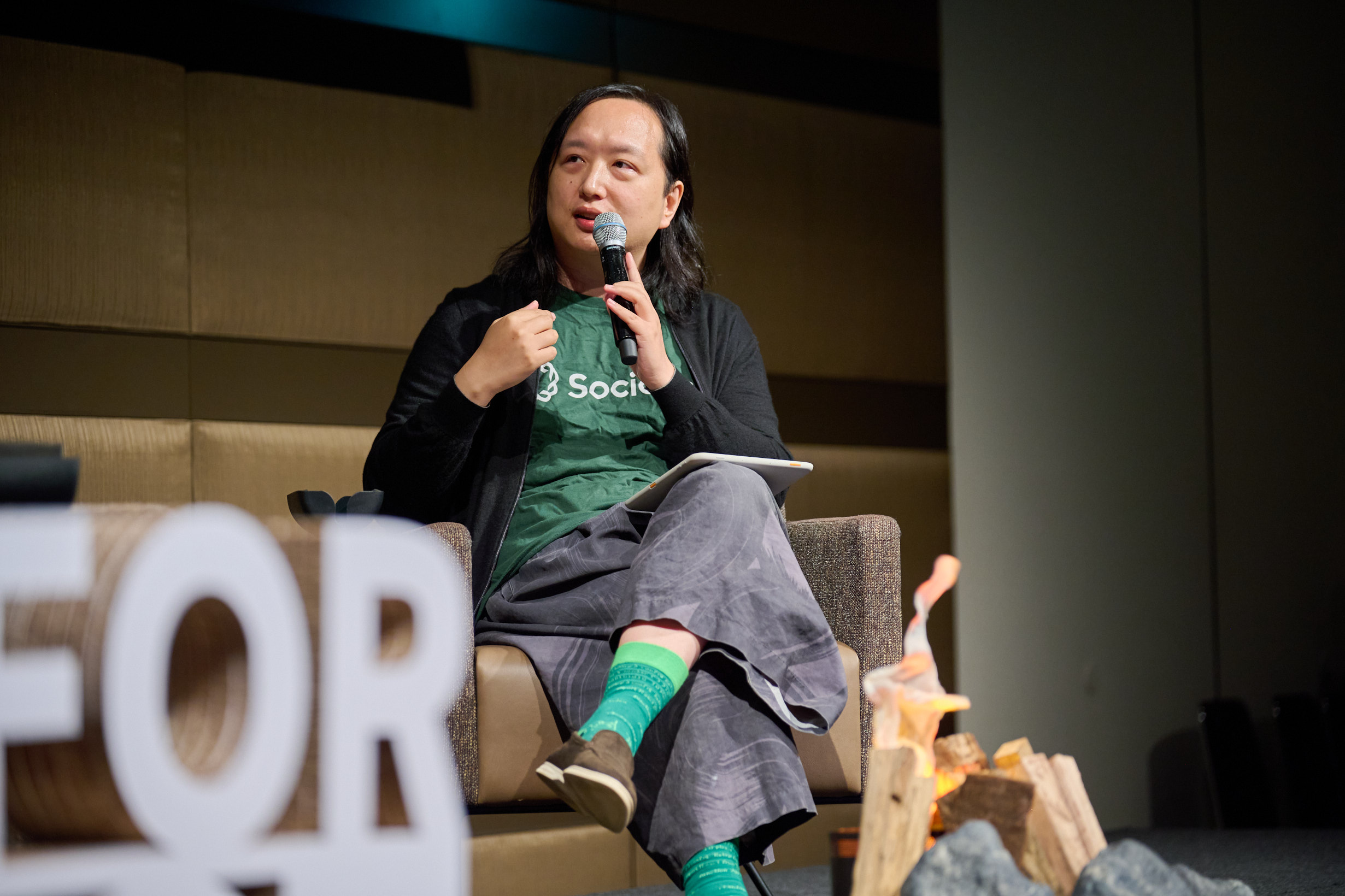
Twenty-four hours from now, a room in central Tokyo will hold a concentration of leadership that does not normally exist in the same place at the same time. Former ministers and blockchain architects. Fusion engineers and impact investors. The builders of news algorithms and the stewards of multi-generational capital. They will have come from different industries, different countries, different theories of how the world works — and they will share one conviction: that the next twenty-five years will be defined not by the technologies we invent, but by the choices we make about how to deploy them.
That is what Tech for Impact Summit 2026 is about. Not a showcase. Not a conference. A working session for the people who will make those choices.
The Room at Kioi
The Tokyo Garden Terrace Kioi Conference sits in the heart of the city’s political and institutional center, a short walk from the Diet Building and the Imperial Palace. It is a deliberate setting. The decisions that will shape 2050 will not be made in auditoriums of ten thousand. They will be made in rooms where the right people can look each other in the eye, challenge each other’s assumptions, and leave with commitments they intend to keep.
Tomorrow, that room will hold the leaders whose work defines the frontier.
Yoshito Hori, founder and president of GLOBIS, will deliver the keynote. Hori has spent three decades building the largest business school in Japan and one of the most influential venture capital platforms in Asia, animated by a belief that entrepreneurial leadership is the most powerful force for social change. His keynote — on the obligation of leaders to build institutions that outlast them — will set the frame for everything that follows.
Former Minister Taro Kono will bring the perspective of someone who has driven digital transformation at the highest levels of Japanese government — reshaping what is possible for both startups and multinationals operating in the world’s fourth-largest economy.
Charles Hoskinson, founder of Cardano, will present a vision of decentralized infrastructure that extends far beyond cryptocurrency — into identity systems, governance frameworks, and financial architecture for the billions whom traditional institutions have never served.
These are not panels to be passively consumed. They are opening moves of conversations that will continue in breakout sessions, bilateral meetings, and the unscripted exchanges that only happen when people of genuine consequence find themselves in the same room.
The Threads That Connect
Over the past month, we have published twenty-seven articles exploring the themes that will converge tomorrow. Each was written to illuminate a single dimension of the landscape. Read together, they reveal something larger: the degree to which the challenges of the next quarter century are not separate problems but a single, interconnected system.
Consider the threads.
Energy and intelligence. Kiyoshi Seko of Kyoto Fusioneering will present the state of commercial fusion — the technology that could provide unlimited clean baseload power within two decades. That is not just an energy story. It is an AI story. The next generation of artificial intelligence demands energy at a scale that renewables alone cannot deliver. Fusion does not compete with solar and wind. It completes them. The executives making decade-long capital allocation decisions need to understand where fusion stands — not as science fiction, but as an engineering timeline with milestones and companies building the critical components today.
Capital and measurement. David Freiberg, who co-developed impact-weighted accounts at Harvard Business School and now leads the practice at EY, will explain why the entire framework of corporate performance measurement is about to change. His work — assigning monetary values to environmental and social externalities — is the analytical foundation regulators in Europe and Japan are building toward. When Ken Shibusawa of Commons Asset Management speaks about patient capital, and when Jesper Koll of Monex Group maps Japan’s capital market transformation, they are describing the same shift: the recognition that financial returns disconnected from societal impact are not sustainable returns.
Technology and trust. Ken Suzuki of SmartNews has built one of the world’s most successful news platforms by optimizing for information quality rather than engagement — because algorithmic media is the epistemic infrastructure of democracy. Sota Watanabe of Startale is constructing the Web3 rails that could make digital identity, asset ownership, and governance transparent and verifiable. Kathy Matsui, who reshaped the global investment thesis on Japan with Womenomics and now deploys capital through MPower Partners with impact criteria in every term sheet, embodies the principle that capital allocation is a moral act. These are different facets of the same question: how do we build systems that people can trust when the stakes are existential?
Health and longevity. Superintelligent AI systems that may eradicate entire categories of disease. A longevity revolution that could extend healthy lifespans to 120. Brain-computer interfaces that transform what it means to be human. These are not distant speculations — the first clinical applications are entering hospitals now. The leaders in tomorrow’s room will make decisions about healthcare investment, regulatory frameworks, and workforce planning that determine whether these technologies reduce inequality or deepen it.
Governance and inclusion. Hiroshi Aoi of Marui Group has demonstrated that stakeholder capitalism is not a slogan but an operating model — one that produces measurable financial outperformance when executed with discipline. Former Minister Kono’s work on digital governance shows that regulatory architecture can accelerate innovation rather than constrain it. The conversations about plurality, data rights, and democratic technology that will unfold tomorrow are grounded in a shared recognition that the institutions designed for the twentieth century are not sufficient for the twenty-first.
Why Tokyo, Why Now
There is a reason this summit takes place in Tokyo during SusHi Tech Tokyo week, and there is a reason it takes place in April 2026.
Tokyo is not merely a convenient venue. It is the proving ground. Japan is simultaneously implementing mandatory sustainability disclosure standards through the SSBJ, undergoing the most significant corporate governance reform in its postwar history, channeling record venture capital into startups, and positioning itself as the regulatory jurisdiction of choice for Web3, digital assets, and emerging technology. No other city in the world is running all of these experiments at once.
And April 2026 is not an arbitrary date. It falls at a moment when the technologies that will define the next era — generative AI, fusion energy, decentralized systems, longevity science, impact measurement — have crossed the threshold from research to deployment. The decisions being made right now, in this quarter and the next, about how to regulate, fund, scale, and govern these technologies will lock in trajectories that persist for decades. The window for shaping those trajectories is open. It will not stay open indefinitely.
What Will Not Happen Tomorrow
It is worth being explicit about what this summit is not.
It is not a celebration of technology for its own sake. The speakers who will take the stage are practitioners — people who have spent years grappling with the gap between what technology promises and what it delivers.
It is not a networking event dressed up in impact language. The invitation-only format ensures that every person in the room has the authority to act on what they learn. Seats are allocated to maximize the density of decision-making power that makes real collaboration possible.
And it is not a one-day affair. The partnerships, investment theses, and policy conversations that emerge from this room will play out over months and years. The summit is a catalyst, not a conclusion.
The Obligation of the Present
The theme of Tech for Impact Summit 2026 is “Beyond Boundaries: Building 2050 Together.” It is a phrase that carries weight only if the people who invoke it are willing to act on its implications.
Building 2050 means accepting that every algorithm, every energy system, every financial instrument is a social choice made by specific people with specific values. Building together means accepting that no single sector, no single country, no single discipline holds the answers. Climate change does not respect the boundary between energy policy and financial regulation. AI governance does not respect the boundary between computer science and philosophy. The only way to address systems-level challenges is with systems-level collaboration.
That is what the room at Kioi is designed to produce.
Tomorrow, Yoshito Hori will ask the leaders in that room what kind of institutions they intend to build. Taro Kono will describe the policy architecture that makes innovation possible at national scale. Charles Hoskinson will present infrastructure for a financial system that includes the four billion people currently locked out. Kathy Matsui will show what it means to allocate capital as if the future matters. Kiyoshi Seko will map the path from fusion physics to commercial power. David Freiberg will demonstrate how to measure what has never been measured. Ken Suzuki will challenge assumptions about what information technology owes to democracy. Sota Watanabe will build the rails for a more transparent digital economy. Jesper Koll will explain why global capital is moving to Japan. Ken Shibusawa will remind everyone in the room that the decisions they make today will compound across generations. Hiroshi Aoi will prove that doing right and doing well are the same thing.
These are not abstractions. These are the people who are doing the work.
A Note From the Founder
I started building the Tech for Impact Summit because I believed that the most consequential conversations of our time were not happening. The people building the technologies were not talking to the people allocating the capital. The people making the policy were not talking to the people affected by it. The people with the most power to shape the future were operating in silos designed for a simpler era.
Tomorrow, those silos dissolve.
To every speaker, partner, and participant who has committed to being in the room: the technologies exist. The capital exists. The knowledge exists. What has been missing is the collective will to deploy them at the scale and speed the moment demands.
Tomorrow we find out if that will exists.
Tomorrow we build.
The Tech for Impact Summit 2026 takes place on April 26 at the Tokyo Garden Terrace Kioi Conference. This is an invitation-only gathering of senior executives, founders, and policymakers shaping the future of technology and impact. Learn about membership and join us in building 2050 together.