TNFD Adoption in Asia: Why Japan Leads
TNFD passed 733 adopters and $22T AUM, with Japan leading. Inside Asia's nature-disclosure wave and the ISSB biodiversity standard.
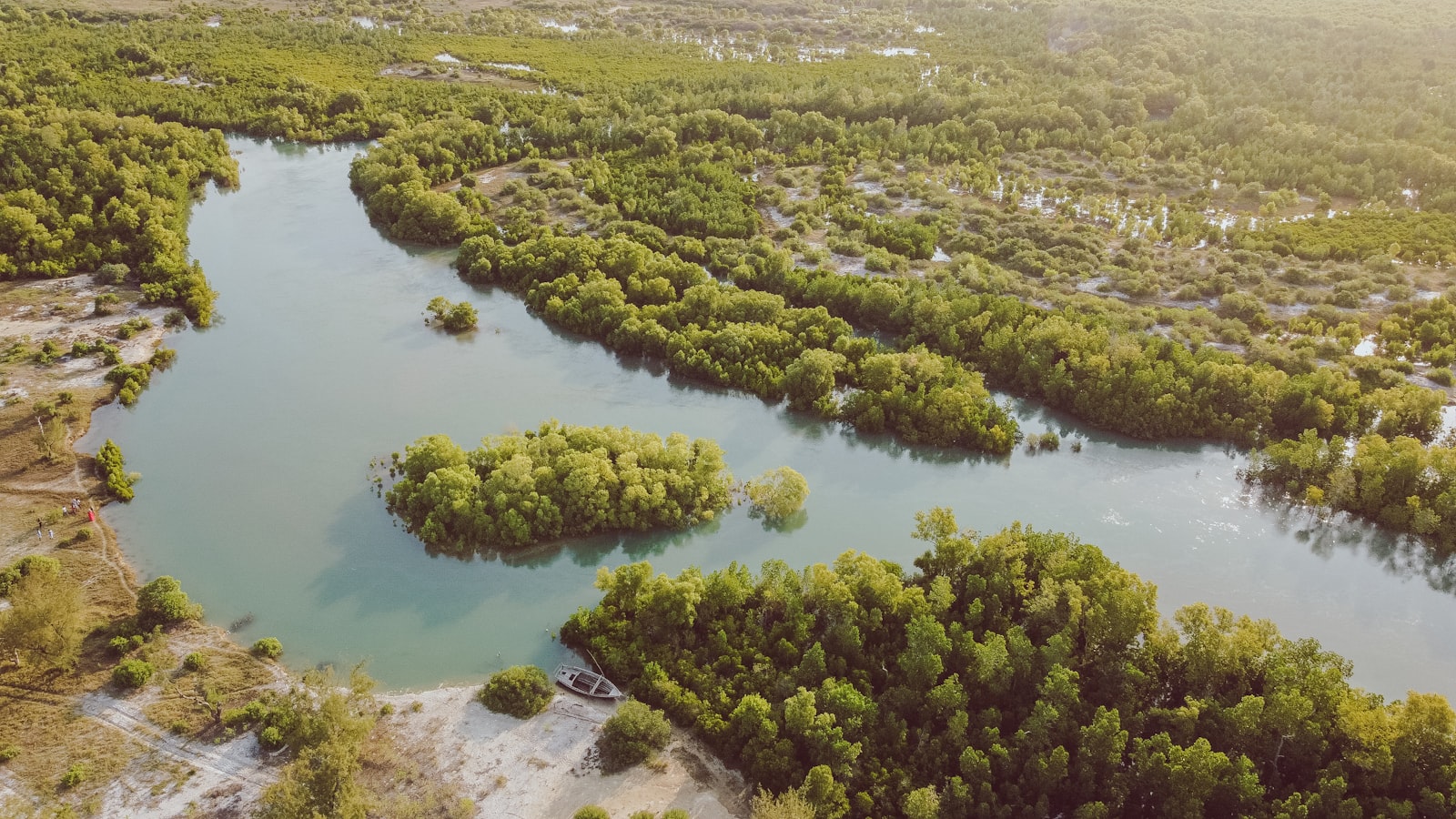
In 2023, UNEP’s State of Finance for Nature tracked US$7.3 trillion into nature-negative activities against US$220 billion into nature-based solutions. More than half of global GDP, about US$58 trillion by the World Economic Forum’s count, depends moderately or highly on natural systems that the other flows are running down.
Until recently, none of that had a reporting line. Climate got one through TCFD and then the ISSB, while nature-related risk stayed on CSR pages and in biodiversity working groups. That is now changing, and the change is fastest in Asia.
TNFD has passed 733 adopters, most of them in Asia
The Taskforce on Nature-related Financial Disclosures (TNFD) published its final framework in September 2023. Two and a half years on, the TNFD Adopters list shows more than 730 organizations representing roughly US$22 trillion in assets under management and over US$9 trillion in market capitalization committed to publishing nature-related disclosures aligned with TNFD recommendations for fiscal years 2023, 2024, 2025, or 2026.
According to TNFD’s own analysis reported by Eco-Business, Asia-Pacific firms account for 86% of organizations surveyed that already use or plan to use nature-related disclosure to inform their reporting. Among financial-institution adopters, Asia is 45% of the cohort.
Within Asia, Japan has the most. Around 130 Japanese companies and financial institutions now run nature-related assessments aligned with TNFD, the largest single-country contingent globally, and the country made up roughly a quarter of the original 320 early adopters. Three megabank groups, Mitsubishi UFJ Financial Group, Sumitomo Mitsui Financial Group, and Mizuho, publish standalone TNFD reports. MUFG’s 2025 report runs the full four-pillar disclosure (governance, strategy, risk and impact management, metrics and targets) across its loan book, asset management arm, and trust banking franchise.
TNFD chair David Craig has attributed Japan’s lead to a cultural “harmony with nature” ethos. Japanese megabanks underwrite forty-year infrastructure loans, trust banks manage pension liabilities running to 2070, and life insurers hold sovereign and corporate bonds against actuarial tables that assume the mid-century goes to plan. Pollinator collapse, freshwater stress, soil degradation, and fisheries depletion all fall inside those horizons, and before TNFD there was no standard way to put them in a risk report.
Two regulatory tracks will make it mandatory, Japan first
TNFD has been voluntary since it launched. Two regulatory tracks will change that.
The first is the Sustainability Standards Board of Japan (SSBJ), which finalized its first disclosure standards in March 2025, substantially equivalent to IFRS S1 and IFRS S2. The SSBJ standards are voluntary for fiscal years ending March 2026 and become mandatory for the largest listed firms (Prime Market segment) starting fiscal year ending March 2027, with phased extension to the rest of the Prime Market by FY2028 and FY2029. That puts Japan ahead of every other major Asian jurisdiction on ISSB-aligned disclosure.
The second is the ISSB’s biodiversity, ecosystems and ecosystem services standard, the workstream long rumored as “IFRS S3.” The exposure draft is scheduled for release in October 2026 at COP17, the seventeenth Conference of the Parties to the UN Convention on Biological Diversity, in Yerevan. The ISSB has signalled that the new standard will absorb large portions of the TNFD framework, repackaged into the IFRS architecture that the SSBJ, and through SSBJ the Tokyo Stock Exchange, will later take up.
So a Prime Market issuer that adopts TNFD voluntarily in 2026 is getting ready for an SSBJ regime that will, within roughly 24 months of the COP17 exposure draft, almost certainly require nature-related metrics on the same line items now reserved for climate. A company that waits will find out around 2028 that it needs data systems, supply-chain traceability, and impact-dependency mapping that took the early movers four years to build.
Climate disclosure went through the same sequence between 2017 and 2022: TCFD was voluntary, then jurisdictions made it mandatory, then late adopters paid premium consulting fees to catch up. Many boards sat through that once already. (On how the wider ESG disclosure layer is tightening across Asia at the same time, see Japan’s CSRD-equivalent regulatory architecture and the EU CBAM forking decision facing Japan, Korea, and ASEAN.)
The opportunity is larger than the compliance cost
Much nature-disclosure coverage treats TNFD as a compliance expense. The WEF has put a number on the other side.
The 2026 World Economic Forum analysis identifies more than 50 investible nature-economy opportunities that could together generate up to US$10.1 trillion in annual business revenues and cost savings by 2030. The categories include regenerative agriculture, sustainable aquaculture, circular packaging, nature-based carbon, biodiversity credits, ecosystem-services markets, and nature-positive infrastructure. Most of that money already moves through existing capital flows; the question is where it is pointed.
The biodiversity finance gap itself, approximately US$700 billion per year by UNEP’s accounting, is small against the long-duration capital held by sovereign wealth funds, public pensions, and global insurers. What those allocators lack is nature data they can measure, compare, and make decisions on. That is what TNFD, SSBJ, and the coming IFRS standard are being built to produce.
The rules firm up over the next 24 months. The WEF puts the revenue ceiling in the trillions. And MUFG, SMFG, and Mizuho have already published the reports that later filers will be measured against. The same banks are the likely authors of the first nature-positive credit policies, of sustainability-linked loans with biodiversity KPIs, and of transition-finance products for agriculture, materials, F&B, tourism, and real estate.
What boards should be deciding in the next two quarters
Before the SSBJ voluntary window opens for fiscal years ending March 2026, boards will want answers to the following:
-
Materiality scope. Has the company run a TNFD-style LEAP assessment (Locate, Evaluate, Assess, Prepare) across its direct operations and upstream supply chain? For Japanese listed corporates most nature-related risk sits two to three tiers up the chain, in soy, palm, beef, rubber, cobalt, and lithium, where data is thinnest. A company without supplier data at those tiers will end up disclosing with caveats attached.
-
Capital-allocation alignment. Does the firm’s transition plan price nature-related risk as an internal cost of capital, the way leading TCFD adopters now price carbon? If not, the gap between disclosed exposure and actual capex and lending decisions will widen, and equity analysts will start flagging it once SSBJ disclosures are filed alongside annual reports.
-
Opportunity portfolio. The WEF lists more than 50 nature-economy categories; some of them sit close to what the firm already does. Japanese trading houses, megabanks, and consumer-goods companies already have the ASEAN footprint to underwrite regenerative agriculture and sustainable aquaculture there, and the supplier data gathered for a LEAP assessment shows where those opportunities are.
The Tech for Impact Summit’s invitation-only executive gatherings take up questions like these. The next summit returns to Tokyo on May 18-19, 2027, with nature-related finance, impact accounting, and the AI x sustainability stack on the agenda. A small number of CFOs, CIOs, and sustainability leaders will be invited to the closed sessions. Search Tech for Impact Summit to be considered.