Ken Shibusawa on Patient Capital and Long-Term Value Creation
Ken Shibusawa, Chairman of Commons Asset Management and great-great-grandson of Shibusawa Eiichi, joins Tech for Impact Summit 2026 to discuss why patient capital and long-term thinking are the keys to reimagining capitalism.
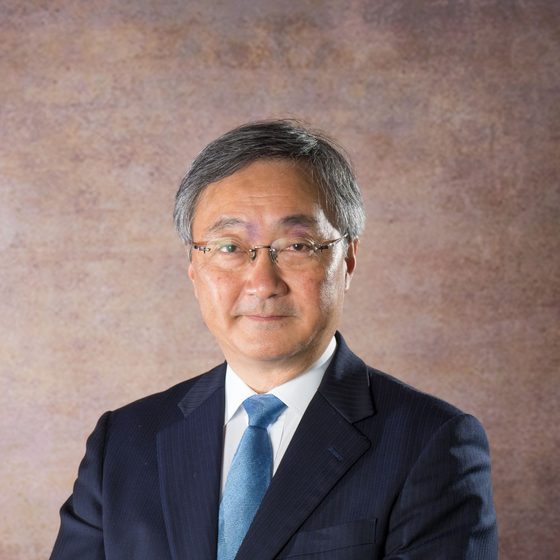
In 2024, Japan put a new face on its ten-thousand-yen banknote: Shibusawa Eiichi, who founded roughly 500 companies and institutions during the Meiji era, among them what became Mizuho Bank, the Tokyo Stock Exchange, and scores of hospitals, universities, and social organizations. He also wrote that commerce and moral purpose could not be separated.
His great-great-grandson, Ken Shibusawa, is Chairman of Commons Asset Management. The firm invests in Japanese equities on a thirty-year horizon and picks companies on their value to society as well as their financials. He will speak at the Tech for Impact Summit 2026 in Tokyo on April 26.
From Wall Street to Commons
Shibusawa studied at UCLA and then spent years at Goldman Sachs and JP Morgan, on trading floors where performance was counted in basis points and holding periods in days.
His conclusion from that time was that investment horizons had shrunk past the point where they could fund the things that take longest to build. Building a good company takes decades, while capital markets reward positions held for months and penalize anything whose payoff falls beyond the next reporting cycle.
In 2008 he founded Commons Asset Management around a Japanese equity fund with a thirty-year horizon. The name refers to wealth creation as a joint enterprise between companies, communities, employees, and investors over long periods.
The fund holds a concentrated portfolio of roughly thirty companies. Selection covers conventional financial analysis plus each company’s social purpose, governance, employee development, and environmental record.
Gappon-shugi
Shibusawa Eiichi used the term “gappon-shugi,” which translates roughly as “joint-foundation-ism” or “collaborative capitalism.” Capital, labor, ideas, and natural resources have to be joined at the foundation to produce anything. Eiichi set this against both laissez-faire capitalism and state-directed economics, and held that business leaders owed society more than after-the-fact philanthropy. He founded Ikkyo Hospital (now Tokyo University Hospital), the predecessor of the Japan Red Cross Society, and dozens of schools alongside his commercial ventures.
Ken Shibusawa has built Commons Asset Management on the same idea. Its annual “Dialogue” events put fund investors in a room with the CEOs of portfolio companies for town-hall-style conversations about purpose, long-term strategy, and how financial performance relates to what the company does for society, rather than about earnings guidance.
ESG on a thirty-year clock
Sustainable finance has had a rough few years: greenwashing, inconsistent standards, politicization. In the United States ESG has become a partisan fight. In Europe, sustainability reporting threatens to become a compliance cost that changes no behavior.
Commons treats ESG factors as the investment thesis rather than a screen on top of one. The reasoning is that a company which mistreats its employees eventually loses its best people, and one with weak governance eventually makes decisions that serve insiders over long-term owners. Over thirty years those costs show up in the numbers.
The Commons 30 Fund has delivered competitive returns since inception with its concentrated portfolio. Many of Commons’ investors have been with the fund for over a decade, in an industry where the average holding period for equity funds is measured in months.
Japan
Japanese commerce has its own long-horizon tradition. “Sanpo-yoshi,” good for the buyer, the seller, and society, predates ESG by centuries. Kongō Gumi, founded in 578 AD, is still operating.
Japan also has its own short-termism. Decades of deflation taught a generation of managers to hoard cash, avoid risk, and prioritize survival over growth. The Tokyo Stock Exchange’s recent governance reforms push companies toward more productive use of capital, more engagement with shareholders, and more transparency about value creation. Shibusawa has backed the reforms publicly. He wants them built on Japan’s own commercial history, not on imported Anglo-American shareholder primacy.
At T4IS 2026
Shibusawa is expected to speak on patient capital, technological change, and long-term value creation for leaders planning toward 2050.
Other speakers include former Minister Taro Kono on policy, Cardano founder Charles Hoskinson on decentralized infrastructure, GLOBIS founder Yoshito Hori with the keynote on entrepreneurial leadership and human capital, Kathy Matsui, general partner at MPower Partners, on impact venture capital, Monex Group’s Jesper Koll on financial markets, and SmartNews CEO Ken Suzuki on the information infrastructure behind democratic and economic decisions.
Commons has been running its thirty-year fund since 2008.
The Tech for Impact Summit 2026 takes place on April 26 in Tokyo. Seats are limited and allocated by invitation. Request your invitation to join Ken Shibusawa and other global leaders shaping the future of capital, technology, and impact.