Ken Shibusawa on Patient Capital and Long-Term Value Creation
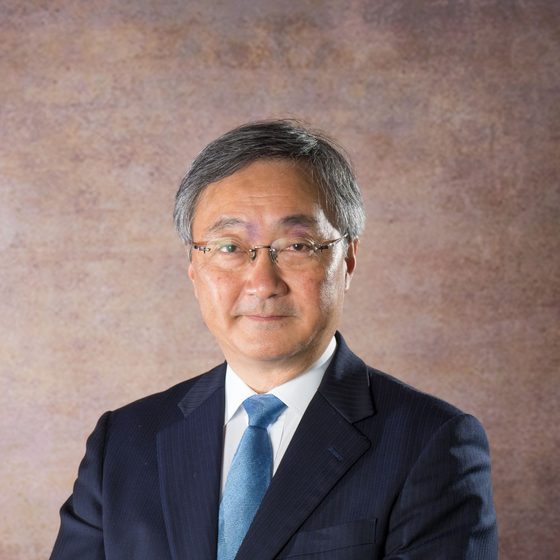
Ken Shibusawa, Chairman of Commons Asset Management and great-great-grandson of Shibusawa Eiichi, joins Tech for Impact Summit 2026 to discuss why patient capital and long-term thinking are the keys to reimagining capitalism.
In 2024, Japan introduced a new ten-thousand-yen banknote. The face on it belongs to Shibusawa Eiichi, a man who founded roughly 500 companies and institutions during the Meiji era, including what became Mizuho Bank, the Tokyo Stock Exchange, and scores of hospitals, universities, and social organizations. He did this while articulating a philosophy that would take more than a century to find its modern vocabulary: the idea that commerce and moral purpose are not opposing forces but inseparable ones.
That philosophy has a living heir. Ken Shibusawa, Eiichi’s great-great-grandson, has spent his career translating his ancestor’s convictions into investment practice. As Chairman of Commons Asset Management, he has built one of Japan’s most distinctive asset management firms around a premise that much of the financial industry still treats as eccentric — that the most reliable path to superior returns is to invest with a thirty-year horizon, select companies creating genuine value for society, and resist the gravitational pull of quarterly earnings cycles. He will bring this perspective to the Tech for Impact Summit 2026 in Tokyo on April 26.
From Wall Street to a Different Kind of Capitalism
Shibusawa’s career began in the markets that epitomize short-termism. After studying at UCLA, he spent years at Goldman Sachs and JP Morgan, working across trading floors where performance was measured in basis points and holding periods were measured in days. He understood the machinery of modern finance from the inside — and he came to believe that something fundamental was broken in how capital markets allocated resources.
The problem, as Shibusawa diagnosed it, was not that markets were irrational. It was that the time horizons governing investment decisions had contracted to the point where they could no longer accommodate the kind of value creation that actually matters. Building a great company takes decades. Solving climate change takes generations. But the dominant logic of capital markets rewards positions held for months, penalizes patience, and systematically undervalues anything whose payoff lies beyond the next reporting cycle.
In 2008, Shibusawa founded Commons Asset Management with a simple but radical proposition: a Japanese equity fund structured around a thirty-year investment horizon. The name itself was a statement of intent. “Commons” refers not to a shared pasture but to the idea that wealth creation, properly understood, is a common enterprise — something that happens between companies, communities, employees, and investors over long stretches of time, not something extracted by one party from the others over short ones.
The fund would hold a concentrated portfolio of roughly thirty companies, selected not primarily for their current financial metrics but for their capacity to create compounding value over decades. The selection criteria would include conventional financial analysis, but also an assessment of each company’s social purpose, governance quality, employee development practices, and environmental stewardship — factors that most investors in 2008 still classified as soft, non-financial, or irrelevant.
Gappon-Shugi: The Philosophy Behind the Portfolio
What distinguishes Shibusawa from other voices in the sustainable finance movement is not his investment methodology, though it is rigorous. It is his philosophical grounding. He does not argue for ESG integration because it reduces risk, though he believes it does. He does not argue for long-term investing because it improves returns, though the evidence supports that claim. He argues from a deeper premise: that capitalism, properly constituted, is a system for creating shared prosperity, and that any version of capitalism that systematically enriches some participants while impoverishing others — or enriching the present while impoverishing the future — is not functioning as intended.
This is not abstract moralizing. It is a direct inheritance from Shibusawa Eiichi, who articulated what he called “gappon-shugi” — a term that translates roughly as “joint-foundation-ism” or “collaborative capitalism.” Where the Western tradition often frames capitalism as a competitive system governed by self-interest and disciplined by markets, gappon-shugi starts from the premise that economic activity is inherently collaborative. Capital, labor, ideas, and natural resources must be combined — joined at the foundation — to produce anything of value. The question is not whether stakeholders are interdependent. They are. The question is whether the system’s rules and incentives acknowledge that interdependence or deny it.
Shibusawa Eiichi developed this philosophy in explicit contrast to both laissez-faire capitalism and state-directed economics. He believed that business leaders had a moral obligation to consider the welfare of society — not as philanthropy after the fact, but as an integral part of how businesses should be conceived, built, and managed. He demonstrated this by founding not only commercial enterprises but also Ikkyo Hospital (now Tokyo University Hospital), the Japan Red Cross Society’s predecessor organization, and dozens of educational institutions.
Ken Shibusawa has made this ancestral philosophy the intellectual backbone of Commons Asset Management. The firm’s annual “Dialogue” events — town-hall-style meetings between fund investors and the CEOs of portfolio companies — are designed to operationalize gappon-shugi in practice. These are not typical shareholder meetings focused on earnings guidance. They are structured conversations about purpose, long-term strategy, and the relationship between financial performance and societal contribution. The premise is that investors and companies are partners in a shared enterprise, and that this partnership requires ongoing, honest communication about what value means and how it should be created.
ESG as Value Creation, Not Compliance
The global ESG movement has reached an inflection point. After a decade of rapid growth, sustainable finance now faces a backlash driven by legitimate concerns about greenwashing, inconsistent standards, politicization, and the gap between ESG rhetoric and real-world impact. In the United States, ESG has become a partisan battleground. In Europe, regulatory complexity threatens to turn sustainability reporting into a compliance exercise that consumes resources without changing behavior.
Shibusawa navigates this terrain with a clarity that comes from having arrived at ESG integration through philosophy rather than fashion. For Commons Asset Management, ESG factors are not a screen applied on top of financial analysis. They are not a marketing label. They are the substance of the investment thesis itself. A company that mistreats its employees will eventually lose its best talent. A company that ignores environmental risks will eventually face regulatory or physical costs that destroy value. A company with poor governance will eventually make decisions that serve insiders at the expense of long-term owners. These are not ethical judgments layered on top of financial analysis. They are financial analysis, conducted on a time horizon long enough for these dynamics to manifest.
This perspective resolves the false dichotomy that plagues much of the ESG debate. Critics argue that considering non-financial factors necessarily means sacrificing returns. Proponents sometimes argue that ESG investing delivers superior returns as if by magic. Shibusawa’s position is more precise: ESG factors are material to long-term value creation, and their materiality becomes visible only when your investment horizon is long enough to see it. On a thirty-year timeline, governance quality is not a nice-to-have. It is the difference between compounding and catastrophe.
Commons Asset Management’s track record supports this thesis. Since inception, the Commons 30 Fund has delivered competitive returns while holding a concentrated portfolio of companies selected for their long-term value creation potential. More importantly, the fund has demonstrated that patient, purpose-driven investing can attract and retain a loyal investor base — many of Commons’ investors have been with the fund for over a decade, an extraordinary retention rate in an industry where the average holding period for equity funds is measured in months.
Japan’s Role in Reimagining Capitalism
There is a reason this conversation is happening in Japan, and it is not merely biographical. Japan’s economic culture has always contained a strain of long-termism that the country’s postwar miracle and subsequent lost decades have alternately amplified and obscured. The concept of “sanpo-yoshi” — good for the buyer, good for the seller, good for society — predates ESG by centuries. The survival of companies like Kongō Gumi, founded in 578 AD, testifies to a business culture that can think in generations, not quarters.
Yet Japan also faces a particular version of the short-termism problem. Decades of deflation trained an entire generation of corporate managers to hoard cash, avoid risk, and prioritize survival over growth. The Tokyo Stock Exchange’s recent governance reforms are explicitly designed to break this pattern — to push companies toward more productive use of capital, more engagement with shareholders, and more transparency about how they create value. Shibusawa has been a vocal advocate for these reforms, arguing that they represent an opportunity to rebuild Japanese capitalism on its strongest historical foundations rather than merely importing Anglo-American shareholder primacy.
This positions Japan as a potential laboratory for a new model of capitalism — one that combines the financial discipline of Western markets with the stakeholder awareness embedded in Japan’s commercial traditions. It is a model that the rest of the world, struggling with the social and environmental costs of pure shareholder capitalism, has reason to watch closely.
What He Will Discuss at T4IS 2026
At the Tech for Impact Summit, Shibusawa is expected to address the intersection of patient capital, technological change, and long-term value creation — and why leaders building toward 2050 need a fundamentally different relationship with time.
He joins a speaker roster assembled to hold these questions from every angle. Former Minister Taro Kono brings the policy architecture of Japan’s digital and economic transformation. Cardano founder Charles Hoskinson offers the decentralized infrastructure perspective. GLOBIS founder Yoshito Hori delivers the keynote on entrepreneurial leadership and human capital investment. Kathy Matsui, general partner at MPower Partners, speaks to impact-driven venture capital. Monex Group’s Jesper Koll anchors the financial markets narrative. SmartNews CEO Ken Suzuki addresses the information infrastructure underlying democratic and economic decision-making.
What Shibusawa adds to this assembly is a time dimension that most business conversations lack. In a world racing to deploy AI, decarbonize energy systems, and redesign financial infrastructure, the question of how fast we can move dominates. Shibusawa asks the complementary question: how do we ensure that what we build endures? How do we structure capital, governance, and purpose so that the systems we create today are still generating value in 2050 — and beyond?
It is a question his great-great-grandfather asked 150 years ago. The institutions Shibusawa Eiichi built still stand. The philosophy he articulated is more relevant than ever. And the descendant who carries it forward has spent a career demonstrating that patient capital is not a luxury the world cannot afford. It is the only kind that actually works.
The Tech for Impact Summit 2026 takes place on April 26 in Tokyo. Seats are limited and allocated by invitation. Request your invitation to join Ken Shibusawa and other global leaders shaping the future of capital, technology, and impact.