Japan's Physical AI Bet: Inside the Industrial Policy Behind 10 Million Robots
Japan set a target of 10 million AI-powered robots across 18 industries by 2040, backed by a ¥10 trillion public-private push. The policy exists because the labor force has no other option.
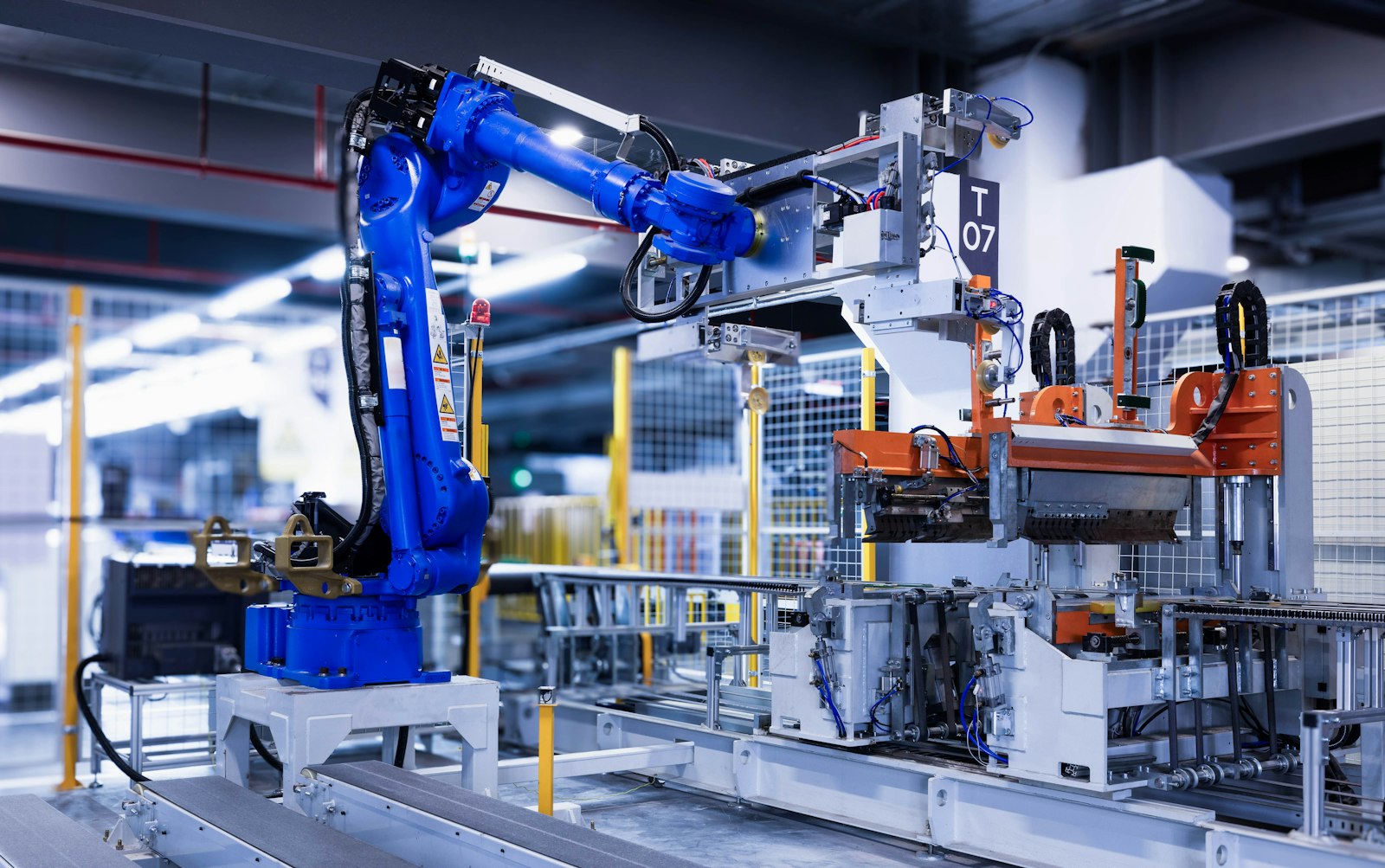
At Haneda Airport this spring, a 132-centimeter humanoid started clocking in for shifts. It rolls baggage carts, wipes down counters and answers basic passenger questions for two to three hours before it needs to charge again. The trial is run by Japan Airlines and GMO AI & Robotics; Japan Times and CNBC both covered it (Japan Times, CNBC). Two to three hours a charge is modest technology. An airline still thought it worth trying.
Japan is pushing physical AI because of its workforce, not because the robots are ready.
The workforce number
Japan’s working-age population peaked at 87.3 million in 1995. By 2024 it was 73.7 million, a 16% drop, and the OECD projects a further 31% decline between 2023 and 2060 (OECD Employment Outlook, Japan country note). A decade from now, a growing share of the work of stocking shelves, piloting cranes, staffing hospital wards and running warehouse floors will have no one to do it.
That is the premise of Japan’s Physical AI Strategy, run through the Ministry of Economy, Trade and Industry. The target: 10 million AI-powered robots deployed across 18 industries by 2040, backed by a roughly ¥10 trillion (about $65 billion) public-private investment target (Japan Times). METI’s minister has said the aim is to capture more than 30% of the global AI robotics market by 2040 (Manila Times, reporting METI Minister Ryosei Akazawa).
What the money goes into
None of the pieces below is a single company’s project.
The Noetra consortium of SoftBank, Sony, NEC, Honda and roughly 40 other firms is building a sovereign AI model for physical-world applications, with a reported investment figure of around $6 billion (Japan Times).
The FRONTia Project, which the Manila Times describes as “the world’s first national AI infrastructure dedicated to physical AI,” is METI’s shared compute and simulation infrastructure, built because individual manufacturers could not justify it alone. Japan used the same approach for semiconductors through Rapidus.
The NVIDIA Cosmos Coalition supplies the foundation-model layer. Twenty named Japanese firms, FANUC, Fujitsu, Hitachi, Honda R&D, Kawasaki Heavy Industries, NEC, SoftBank Corp., Sony Group and Yaskawa among them, are building on NVIDIA’s Cosmos world-model platform to train robots in simulation before they touch a factory floor (NVIDIA Newsroom). Jensen Huang called it “a once-in-a-generation opportunity for Japan” in the same release. Vendors say that about every market; here the member list is Japan’s industrial base rather than a handful of pilots.
Model, infrastructure and compute are being funded together under one national target, as Japan did for chips, high-speed rail and the postwar auto industry. A demographic problem has been handed to industrial policy, the instrument Tokyo has run at this scale before.
Capital
Industrial policy usually leads private capital by years. Here the two are close together. Global robotics startups raised $18.8 billion through the first half of 2026, more than the $15 billion raised in all of 2025 and above the prior cycle peak of $14.1 billion in 2021 (Crunchbase News). SoftBank’s Masayoshi Son has said why he is positioned there: “the next golden sector to produce a trillion-dollar market cap company will be physical AI and humanoid robots,” which he has framed as 50 times larger than the dot-com run (CNBC).
Whether that multiple holds is a separate question. The money itself is real.
The 18 industries
METI’s target spans manufacturing, logistics, construction, agriculture, healthcare and hospitality. The sequencing follows where the labor gap already hurts rather than which sector is most AI-ready. Warehousing and last-mile logistics go first: structured spaces, repetitive tasks, operators willing to run a robot that still needs a human nearby. Construction and eldercare go last, because the environments are worse, the liability is real, and the technology is years further out. The Haneda trial sits at the easy end; an airport already runs on procedures, which is what a robot can be trained against. The harder test is whether the same model-infrastructure-compute stack can be retrained fast enough to reach eldercare before the population figures worsen.
Questions for investors
Anyone looking at this as capital has three things to check. Whether they are pricing 2030 capability or 2040 capability, since METI is deploying the easy cases now and pushing the hard ones out. Which layer they are exposed to, the Noetra model, the FRONTia compute or the Cosmos Coalition’s simulation layer, since the memberships overlap but the bets do not. And whether they expect the same labor shortage elsewhere, because Japan is only the country where it arrived first.
The caveat
The JAL robot at Haneda is nowhere near doing a human’s job. Two to three hours per charge, a unit cost of roughly ¥2.4 million, and a scope limited to baggage and basic wayfinding: early-stage technology with a headline attached. Most of the distance between “10 million robots by 2040” and a robot that reliably does what a 2026 warehouse worker does has not been covered.
That distance is where the executive decision sits. Build, partner or invest, and on what timeline, depends on whether physical AI is priced as a 2030 capability or a 2040 one. METI is doing both: near-term deployment in narrow, forgiving use cases such as baggage, greeting and basic material handling to build operational and regulatory experience, while caregiving, skilled trades and construction sit on a longer runway regardless of how fast the technology improves.
Beyond the factory
Japan’s aging population is usually discussed as a fiscal problem: pension math, healthcare spending. The physical AI strategy is the same problem restated as industrial capacity. A country has decided, at national-policy scale, that labor it does not have will be replaced by machines it does not yet fully trust. For anyone working on AI governance or future-of-work frameworks, it is a live case of a demographic constraint removing the option to wait for the technology to mature.
Whether funding model, infrastructure and compute together under one national target beats the alternatives, importing capacity or accepting managed decline, is an argument to have before 2027.