Japan's Hydrogen Bet in 2026: The Tonnage Targets Held, the Power-Mix Line Did Not
Japan kept its 3/12/20 million-tonne hydrogen targets and a ¥3 trillion price-gap subsidy, then set no hydrogen or ammonia share in the FY2040 power mix. What that gap says about the next decade of Asian energy policy.
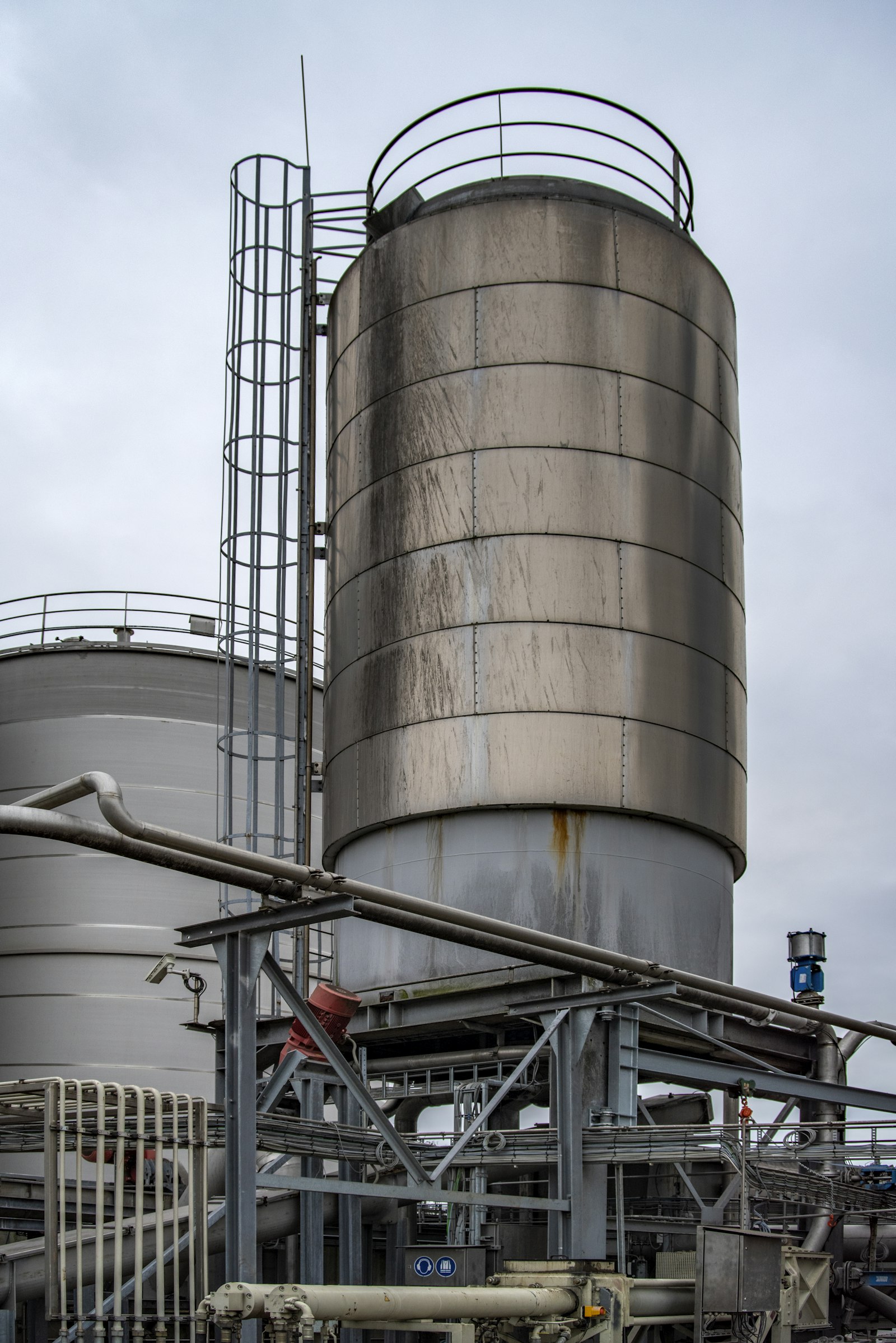
Four storage tanks with a combined capacity of 160,000 tonnes are going up on the Aichi coast, beside a coal-fired power station. What goes into them is ammonia, produced in Louisiana and shipped across the Pacific, and the plan is that from fiscal 2029 it replaces a fifth of the heat that JERA’s Hekinan plant currently gets from coal (Japan Beyond Coal).
Hekinan is the largest physical asset Japan has committed to on the back of its hydrogen and ammonia policy. In February 2025 that policy changed in one place, and most summaries went past it.
What Japan committed to
The Basic Hydrogen Strategy, revised in June 2023, set three numbers: 3 million tonnes a year of hydrogen supply by 2030, 12 million tonnes by 2040 including ammonia, and 20 million tonnes by 2050. Behind them sits a headline figure of ¥15 trillion — around US$110 billion — in combined public and private investment over fifteen years (CSIRO HyResource).
The strategy also set landed-cost targets: hydrogen at ¥30 per normal cubic metre CIF by 2030, falling to ¥20 by 2050, and ammonia at ¥15–20 per normal cubic metre by 2030 (same source). Those are the prices at which the fuel is expected to stand up without support.
The machine built to deliver it
The Hydrogen Society Promotion Act was enacted in May 2024 and took effect in October 2024. Its centrepiece is a price-gap support scheme: the state covers the difference between the cost of supplying low-carbon hydrogen or its derivatives and a fossil reference price. The commitment is ¥3 trillion over fifteen years from the start of supply, with the first application window running from 22 November 2024 to the end of March 2025 and supported supply expected to begin by Japanese fiscal 2030, continuing for ten years after support ends (CSIRO HyResource).
The government’s own premise is that the fuel does not clear on price against fossil alternatives, will not for most of the 2030s, and that the state will carry the difference for fifteen years to get a supply chain built around one technology choice.
The scheme is now moving money. JERA was certified as a low-carbon hydrogen and derivatives supplier under it in December 2025 (JERA), and JOGMEC confirmed the grant on 16 February 2026 (Japan Beyond Coal). US-produced blue ammonia was priced at US$685 per tonne CFR US Gulf Coast as of February 2026 (same source).
The line that disappeared
The seventh Strategic Energy Plan, approved by Cabinet in February 2025, sets the actual power mix. For FY2040 it puts renewables at 40–50% of generation, up from 22.9% in FY2023; nuclear at around 20%, up from 8.5%; and thermal down to roughly 30–40% from nearly 69% (Enerdata; IEA). The renewables band is itemised: solar 23–29%, wind 4–8%, hydro 8–10%, geothermal 1–2%, biomass 5–6%. Alongside it sits an interim target of cutting greenhouse gas emissions 73% by FY2040 against FY2013 levels.
There is no share for hydrogen and ammonia. The sixth plan had carried one — approximately 1% of the FY2030 mix. The seventh sets no equivalent number for FY2040 and repositions hydrogen and ammonia mainly as answers for hard-to-abate sectors rather than as a slice of the electricity pie (InfluenceMap).
The volume targets stayed, and so did the subsidy. The Hekinan retrofit is still on course for FY2029. The number that would have made the power-sector half of the programme measurable is missing from the table.
Two readings
The generous reading is technocratic honesty. Co-firing ammonia in coal units was never going to be cheap electricity, and a planning document that pretends otherwise misallocates capital for fifteen years. Dropping the share target while keeping the supply targets says: build the molecules, the customers will be found, and they are more likely to be steel, chemicals, shipping and fertiliser than the grid.
The harder reading is that a share target is the number a programme gets judged against. Remove it and the power-sector limb of the hydrogen strategy becomes difficult to fail. Hekinan can proceed at 20% co-firing on price-gap support without anyone having to answer whether 20% of one coal unit, subsidised, was the best available use of that money against the same yen spent on transmission, storage or offshore wind — sitting right there in the plan at 4–8% of the 2040 mix.
Either way the supply chain gets built, and what the molecules are for stays open for another few years.
Outside Japan
Which reading turns out right affects three groups.
Asian utilities weighing retrofits. Co-firing is attractive because it uses the plant you already own. The Japanese case is the most advanced test anywhere of whether that logic survives contact with delivered fuel costs, and the answer is arriving in public, on a documented timetable, with the subsidy amounts disclosed.
Corporates writing transition plans. A transition plan that leans on co-fired power inherits the subsidy dependency underneath it. Under SSBJ in Japan and ISSB standards elsewhere, transition plans are disclosed, and a disclosed plan resting on a fuel pathway whose economics depend on a fifteen-year state commitment carries a named external assumption. That assumption belongs in the disclosure itself. It also interacts with the carbon-pricing machinery Japan is standing up in parallel — see our briefing on Japan’s emissions trading system — and, for exporters, with the CBAM reckoning arriving across Asia.
Investors in adjacent bets. Japan is running several long-horizon energy programmes at once. Fusion, where Kyoto Fusioneering is one of the more credible private entrants, and the grid buildout being forced by AI data-centre demand, are competing with hydrogen for the same engineering talent, grid connections and political attention, and the dropped share target hints at where hydrogen currently stands in that queue.
Three open questions
What is the reference price the price-gap scheme pays against, and what happens to the payment when LNG is cheap? A subsidy indexed to a volatile benchmark has a fiscal profile nobody has publicly stress-tested.
If 12 million tonnes by 2040 is met while the power sector takes a small share, which sectors absorb the rest — and are those offtakers contracted today, or assumed?
What is the plan for a coal unit retrofitted to 20% co-firing when support ends? Ten years past a fiscal-2030 supply start puts that question in the early 2040s, comfortably inside the operating life of the asset and well before Japan’s 2050 target.
None of these have public answers yet.
Tech for Impact Summit 2027 takes place in Tokyo on 18–19 May 2027. Climate and energy is one of its core tracks, and the summit is invitation-only. Utilities, industrial offtakers and the capital behind either can ask to be considered at tech4impactsummit.com/apply.