Japan's 1.25 GW Battery Award Faces a 170 GW Queue
Japan awarded 1.25 GW of grid batteries while connection applications reached 170.8 GW. The grid queue is now the bottleneck.
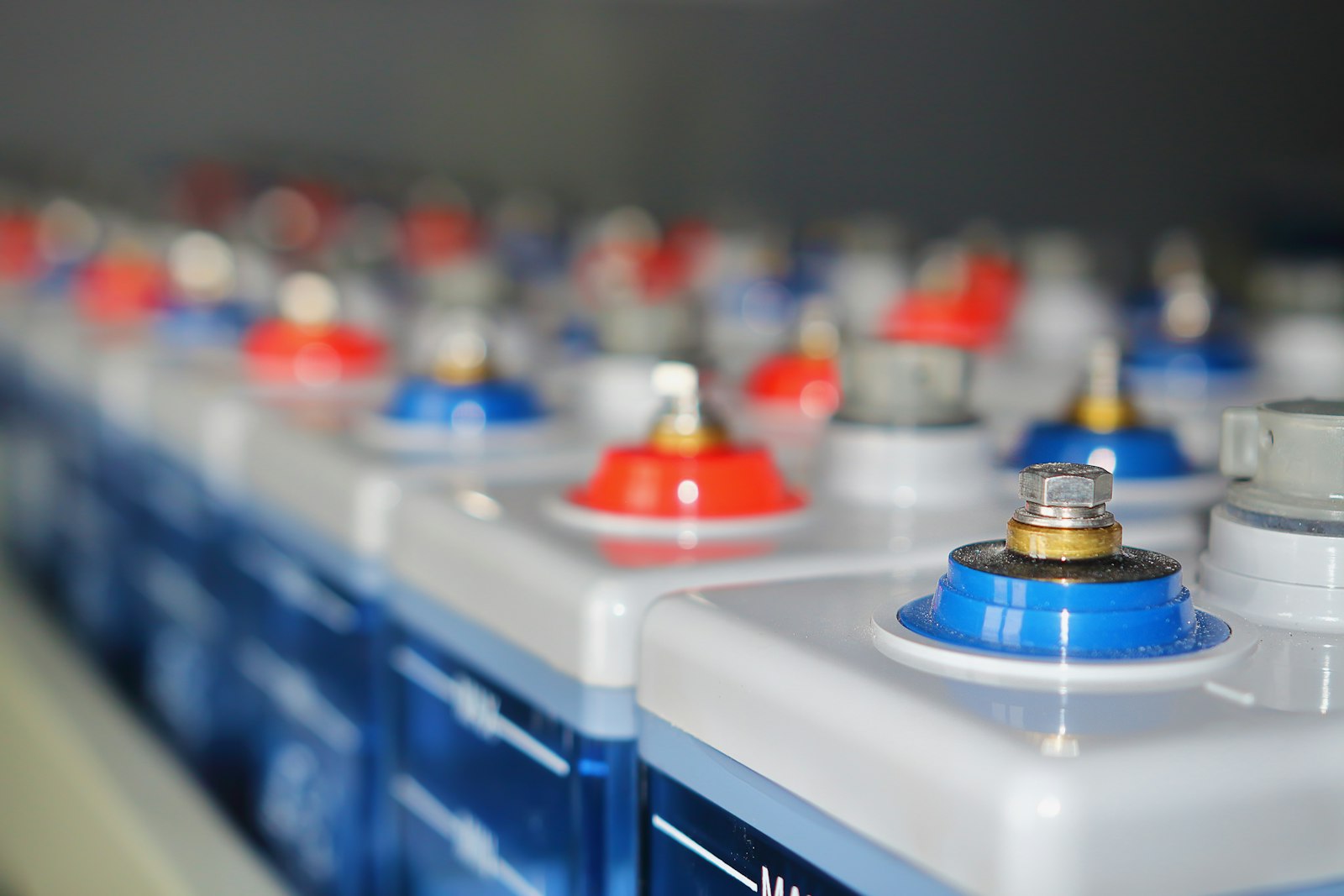
Japan’s grid operators awarded 1.25 gigawatts of battery storage this year, spread across 19 projects, in the third round of the Long-Term Decarbonisation Auction — a capacity market mechanism run by OCCTO, the Organisation for Cross-regional Coordination of Transmission Operators (Energy-Storage.News). Battery storage took two-thirds of the 10.9 GW of capacity bid into the round. Winning projects sign 20-year fixed-revenue contracts and start delivering capacity in fiscal year 2027. It is the kind of number a national energy strategy points to as evidence the policy is working.
Measured against what is actually trying to connect to Japan’s grid, 1.25 GW is close to a rounding error.
What the auction actually rewarded
This round tightened the rules from the previous one. Where earlier auctions accepted both 3-hour and 6-hour battery projects, round three required a minimum 6-hour discharge duration — a deliberate push toward batteries that can carry a grid through an evening peak, not just smooth a short spike. Winning projects also had to meet a new cybersecurity certification, JC-STAR, and a domestic-content rule capping any single foreign country’s battery cells at 30% of a project’s awarded capacity — a supply-chain hedge that reads as much like industrial policy as energy policy, given how concentrated global battery cell production is in one country.
Batteries were not the only technology to clear the auction. Pumped hydro took 453 MW, ammonia co-firing 264 MW, hydrogen generation 253 MW, biomass 101 MW, and nuclear 1.94 GW combined. But battery storage’s 1.25 GW, at two-thirds of the round’s bid capacity, was the auction’s clearest signal about where near-term flexibility procurement is actually going.
BloombergNEF’s read on the broader pipeline puts this single auction round in context: grid-scale battery installations are expected to exceed 1 GW a year starting in 2026, rising to at least 1.5 GW a year later in the decade. The projects awarded in this round contribute roughly 1.3 GW of that from 2027 onward, with later LTDA rounds adding closer to 800 MW a year toward 2029 and 2030. None of these are small numbers for a market that had almost no grid-scale battery storage a few years ago.
The queue the auction doesn’t touch
The auction allocates a subsidy-backed revenue contract to a fixed slate of winners. It says nothing about the much larger set of projects that never entered the auction at all, or entered and lost, and are now sitting in Japan’s ordinary grid-connection queue waiting for a transmission operator to tell them whether there is room.
That queue has grown fast. Applications to connect standalone battery storage projects to Japan’s grid rose from roughly 70 GW in mid-2024 to 170.8 GW by the end of 2025, according to analysis from the Institute for Energy Economics and Financial Analysis (IEEFA). Of that queue, about 17% — 28.7 GW — has actually been awarded a grid connection contract, itself a tenfold increase since the start of 2024. The rest is still waiting.
Line the two numbers up. The auction that made headlines this year cleared 1.25 GW. The queue behind it, even after stripping out the roughly six-sevenths that hasn’t yet secured a connection contract, still dwarfs it by more than an order of magnitude.
Why the queue moves slower than the applications
BloombergNEF analyst Isshu Kikuma described the mechanics of the bottleneck to Energy-Storage.News in terms any developer trying to build in Japan would recognize: “It takes time to get the response from TSOs, and then even when they comment back, they might say there’s no availability” (Energy-Storage.News). A transmission system operator has to model whether a proposed connection point can actually carry the new load without upgrades, and where upgrades are needed, someone has to pay for them — usually the developer, at a cost that can make or break a project’s economics.
Two other constraints compound the delay. Japan’s terrain is more than 70% mountainous or forested, which narrows the pool of sites where a large battery installation and a viable grid connection point coincide. And the queue itself has become a target for speculative filing: developers apply for grid connection capacity at multiple sites before they have secured land, financing, or a realistic construction timeline, in effect banking optionality while the queue backs up behind them. Regulators have started building fast-track processes to separate serious projects from speculative ones, though it is too early to say how much of the backlog that clears.
What this means for the flexibility Japan’s grid actually needs
None of this makes the LTDA auction meaningless. A 20-year fixed-revenue contract is exactly the kind of instrument that gets a battery project financed in a market where merchant revenue alone is too uncertain to underwrite construction debt, and OCCTO’s decision to require 6-hour duration this round pushes the market toward batteries that address evening peak demand rather than short-duration arbitrage alone. The domestic-content rule signals that Japan is treating battery supply chains as a resilience question, not just a procurement line item.
But an auction that clears 1.25 GW against a 170.8 GW queue is not describing a storage shortage that better auction design will solve on its own. It is describing a grid-connection process that cannot move capacity through it fast enough to match developer interest, in either direction — not fast enough to build out the flexibility a higher-renewables grid will need, and not fast enough to weed out the speculative filings that are clogging the same queue. The 2027 wave of storage coming online from this year’s auction round will be real. The gap between what got funded and what is still waiting in line is the more useful number for anyone trying to judge how fast Japan’s grid can actually absorb the clean-energy buildout it has committed to.