サイモン・ハーツェル:ケンブリッジの研究室から世界市場へ——ディープテック投資の最前線
IQ Capitalのマネージングパートナーであるサイモン・ハーツェルがTech for Impact Summit 2026に登壇。量子コンピューティングからフォトニクスまで、ディープテック投資がなぜ今後10年で最も重要な資本配分戦略であるかを語る。
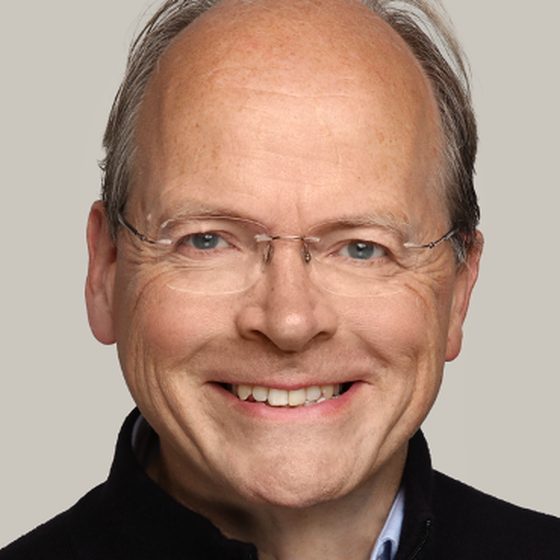
Simon Hirtzel is Managing Partner of IQ Capital, a venture firm in Cambridge that invests in companies coming out of research laboratories. Its portfolio includes quantum computing architectures, photonic processors, materials engineered at the atomic scale, and AI systems built on new mathematics and physics rather than on tweaks to existing models. In most of these companies the core intellectual property took years, sometimes decades, to develop before anyone wrote commercial code.
That is a different business from the one most venture funds run. A typical software fund wants product-market fit, a quick series of rounds at rising valuations, and an exit inside a few years. Speed is the whole model: deploy fast, iterate fast, return capital fast. Hirtzel’s firm is built for companies that may not have a product yet, and sometimes do not yet have a company. The timelines are measured in years of engineering before the first sale.
He speaks at Tech for Impact Summit 2026 in Tokyo on April 26.
Cambridge
IQ Capital makes sense only in the context of where it sits. The University of Cambridge and the labs around it hold one of the densest concentrations of frontier research anywhere. The Cavendish Laboratory alone has produced 30 Nobel Prize winners. Physics, engineering, computer science and materials science departments keep producing results that have no commercial home yet.
For a long time, capital was the missing piece. A university spin-out is often years from revenue. Its founders are scientists, not salespeople. Its product may not work at scale yet, and its market may not exist yet. A venture firm that wants a proven business model and near-term traction has no way to price that.
IQ Capital was founded in Cambridge to invest at exactly that stage, often before there is a product. The bet is not that a customer shows up next quarter. It is that the science holds, the applications are large, and the team can get from a lab result to a business over a long and uncertain road.
Diligence looks different when the asset is a paper rather than a revenue chart. Assessing a quantum computing startup means understanding quantum error correction. Assessing a photonics company means reading work on integrated silicon photonic circuits. Assessing a materials venture means being able to tell a laboratory curiosity from a process that can run in a factory. IQ Capital has built a team and an advisory network that can make those calls, and a fund structure that can wait for the answer.
Deep tech and impact
A scheduling app takes a share of a market that already exists. A working fusion company creates one. Deep tech investing lives on the second side of that line, and that is where its overlap with impact comes from.
The companies in IQ Capital’s portfolio work on problems at the level of physics and engineering. Quantum computing targets optimisation problems classical machines cannot touch: drug discovery, materials, logistics, climate modelling. Photonic computing offers processing speeds and energy efficiency that could slow the growth in data-centre power consumption that AI itself is driving. New materials mean lighter, stronger, more recyclable products across manufacturing.
None of this is science fiction. In many cases the science already works at laboratory scale. The open question is manufacturing, distribution and price: can it be made and sold at a scale that makes commercial sense? That is the question a technically literate, long-horizon fund exists to answer.
Hirtzel’s own framing of the impact case is narrow. He does not argue that deep tech companies are good because they mean well. He argues that companies working on energy, computation, materials and health are working on the constraints underneath every other hard problem, whether or not they use the word impact.
Patient capital
“Patient capital” gets used loosely in impact investing. In deep tech it has a specific price. IQ Capital’s holding periods run well past a standard venture fund’s. A portfolio company may need five, seven or ten years before it reaches a commercial inflection point, and progress over that period is lumpy: long stretches of engineering with little to show, then a result that changes what is possible.
The firm does not simply wait. It helps founding teams build management capability, find manufacturing partners, identify early customers and work through the regulatory regimes that govern advanced technologies. Being inside the Cambridge ecosystem also gives it a steady supply of technical talent, research collaborations and follow-on investors who accept the same timelines.
The return profile follows from the structure. Any single company carries more binary risk than a software startup, because the technology either works at scale or it does not, and there is less room to pivot. The companies that get through tend to hold advantages in intellectual property, scientific expertise and manufacturing know-how that are very hard to copy. A competitor cannot clone a fabrication process the way it can clone a feature. So the portfolio carries more failures and, among the survivors, larger and more durable winners, for their markets and for the problems they were started to solve.
The UK and Japan
Hirtzel arrives in Tokyo at a point where the United Kingdom and Japan are working more closely on frontier technology. The two countries signed a comprehensive digital partnership agreement, and cooperation on semiconductors, quantum computing, AI safety and clean energy has picked up. Japan’s national quantum strategy and its public spending on next-generation computing give UK deep tech companies a reason to look east.
The fit is practical. The UK is strong at fundamental research and at the early commercialisation step, the university-to-spin-out pipeline IQ Capital works in. Japan is strong at precision manufacturing, systems integration and corporate capital that can stay in a company until full-scale production. Japanese industrial groups can manufacture photonic components, quantum devices and advanced materials at tolerances few other countries can match, and Japanese corporate venture arms, which have grown a great deal in recent years, are looking past domestic software toward technologies with global reach.
For allocators and corporate leaders at T4IS, the useful questions are concrete. How do you assess risk in a portfolio whose underlying technologies need a physicist to evaluate? What does a diversified deep tech portfolio look like? Where could UK research and Japanese manufacturing co-invest? None of those get answered from a deck. They get answered across a table, over a couple of hours, which is the format the summit is built around.
At T4IS 2026
At the summit, Hirtzel is expected to cover how deep tech investing works in practice: how to find, fund and scale companies building foundational technologies with decades-long horizons.
He joins a roster that looks at long-term value creation from several angles. Former Minister Taro Kono on Japan’s technology policy. Cardano founder Charles Hoskinson on decentralised infrastructure. GLOBIS founder Yoshito Hori, who gives the keynote on entrepreneurial leadership. Kathy Matsui, general partner at MPower Partners, on impact-oriented venture capital. Ken Shibusawa of Commons Asset Management on patient capital and multi-generational thinking. Jesper Koll of Monex Group on the macroeconomics of Japan’s investment revival.
Hirtzel is the only investor on that list whose portfolio companies are still, in many cases, in the lab. The patient capital Shibusawa talks about has to be patient for something specific, and the products that would sustain the industrial revival Koll describes have to be invented before anyone can manufacture them. That is the part of the chain Hirtzel works on, and it is the part the rest of the programme takes for granted.
The Tech for Impact Summit 2026 takes place on April 26 in Tokyo. Seats are limited and allocated by invitation. Request your invitation to join Simon Hirtzel and other global leaders shaping the future of technology, investment, and impact.