サイモン・ハーツェル:ケンブリッジの研究室から世界市場へ——ディープテック投資の最前線
IQ Capitalのマネージングパートナーであるサイモン・ハーツェルがTech for Impact Summit 2026に登壇。量子コンピューティングからフォトニクスまで、ディープテック投資がなぜ今後10年で最も重要な資本配分戦略であるかを語る。
Most venture capital follows a familiar script. A software startup finds product-market fit, raises successive rounds at escalating valuations, and either reaches an exit or doesn’t — all within a compressed timeline that rewards speed over substance. The entire model is optimized for capital efficiency in a narrow sense: fast deployment, fast iteration, fast returns.
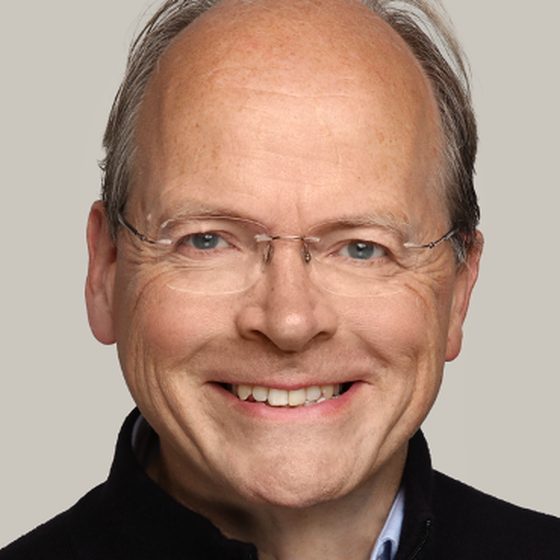
Simon Hirtzel has spent his career investing according to a fundamentally different logic. As Managing Partner of IQ Capital, the Cambridge-based deep tech venture firm, he backs companies that emerge not from hackathons or incubators but from research laboratories — companies whose core intellectual property took years or decades to develop before a single line of commercial code was written. Quantum computing architectures. Photonic processors. Advanced materials engineered at the atomic scale. AI systems built on breakthroughs in mathematics and physics rather than incremental improvements to existing models.
This is deep tech investing, and Hirtzel will bring its particular discipline and ambition to the Tech for Impact Summit 2026 in Tokyo on April 26.
The Cambridge Equation
To understand IQ Capital, you have to understand Cambridge. The University of Cambridge and its surrounding ecosystem constitute one of the densest concentrations of frontier scientific research on earth. The Cavendish Laboratory alone has produced 30 Nobel Prize winners. The university’s departments in physics, engineering, computer science, and materials science generate a continuous stream of discoveries that sit at the boundary between what is known and what is possible.
What has historically been missing is the capital infrastructure to move those discoveries from laboratory demonstration to commercial deployment. University spin-outs face a particular funding challenge. Their technology is often years away from revenue. Their founding teams are scientists, not salespeople. Their go-to-market strategies require building markets that do not yet exist for products that do not yet work at scale. Traditional venture capital, with its preference for proven business models and near-term traction, is structurally unsuited to this kind of company.
IQ Capital was built to fill that gap. Founded in Cambridge and deeply embedded in the university ecosystem, the firm invests at the earliest stages of deep tech commercialization — often before a company has a product, sometimes before it has a company at all. The investment thesis is not that these technologies will find customers next quarter. It is that the fundamental science is sound, the potential applications are transformative, and the team has the capability to navigate the long, uncertain path from breakthrough to business.
This requires a form of due diligence that most venture firms are not equipped to perform. Evaluating a quantum computing startup means understanding quantum error correction. Evaluating a photonics company means reading papers on integrated silicon photonic circuits. Evaluating an advanced materials venture means knowing the difference between a laboratory curiosity and a scalable manufacturing process. IQ Capital has assembled a team and an advisory network with the scientific literacy to make these judgments — and the investment patience to act on them.
Why Deep Tech Is Inherently Impact-Oriented
There is a distinction in venture capital between companies that capture existing value and companies that create new value. A software company that builds a better scheduling tool captures a share of an existing market. A company that develops a commercially viable fusion energy technology creates a market — and potentially reshapes civilization.
Deep tech investing sits firmly in the value-creation category, and this has profound implications for impact. The technologies in IQ Capital’s portfolio are not incremental improvements to existing systems. They are foundational capabilities that, if successfully commercialized, address problems at the level of physics and engineering rather than at the level of user interface design.
Consider the trajectory. Quantum computing promises to solve optimization problems that classical computers cannot approach — problems in drug discovery, materials science, logistics, and climate modeling. Photonic computing offers processing speeds and energy efficiency that could break the exponential growth in data center power consumption that currently threatens to undermine the sustainability of AI itself. Advanced materials open pathways to lighter, stronger, more recyclable products across every manufacturing sector.
These are not speculative fantasies. They are engineering challenges with identified pathways to solution, being pursued by teams with the scientific credentials to execute. The uncertainty is not whether the science works — in many cases, it demonstrably does at laboratory scale. The uncertainty is whether it can be manufactured, distributed, and sold at a price and scale that makes commercial sense. That is precisely the uncertainty that patient, technically literate venture capital is designed to resolve.
Hirtzel has articulated this connection between deep tech and impact with a precision that avoids the vagueness that often plagues impact investing discourse. The argument is not that deep tech companies are virtuous because they intend to do good. It is that companies solving fundamental physical and engineering problems are, by the nature of what they do, addressing the constraints that make humanity’s most urgent challenges so difficult. Energy. Computation. Materials. Health. These are not market verticals. They are the substrate on which every other solution depends.
Patient Capital for Frontier Technologies
The phrase “patient capital” appears frequently in impact investing circles, but deep tech investing gives it a specific and demanding meaning. IQ Capital’s investment horizon extends well beyond the typical venture fund lifecycle. The companies it backs may require five, seven, or ten years of development before they reach commercial inflection points. During that period, they need capital partners who understand the non-linear nature of deep tech progress — long plateaus of research and engineering punctuated by sudden breakthroughs that redefine what is possible.
This patience is not passivity. IQ Capital actively supports its portfolio companies through the transition from science to commerce, helping founding teams build management capability, develop manufacturing partnerships, identify early adopter customers, and navigate the regulatory landscapes that govern advanced technologies. The firm’s position within the Cambridge ecosystem provides access to a continuous pipeline of technical talent, research collaborations, and follow-on investors who share its long-term orientation.
The return profile of deep tech investing reflects this structure. Individual companies carry higher binary risk than a typical software startup — the technology either works at scale or it doesn’t, with less room for the kind of pivoting that characterizes consumer internet businesses. But the companies that do succeed tend to build durable competitive advantages rooted in intellectual property, scientific expertise, and manufacturing know-how that are extraordinarily difficult to replicate. The result is a portfolio dynamic where the winners can be genuinely transformative — for their markets, their investors, and the problems they set out to solve.
The Japan-UK Deep Tech Corridor
Hirtzel’s participation in the Tech for Impact Summit comes at a moment of increasing strategic alignment between the United Kingdom and Japan on frontier technology. The two countries signed a comprehensive digital partnership agreement, and bilateral cooperation on semiconductors, quantum computing, AI safety, and clean energy technology has accelerated. Japan’s national quantum strategy and its substantial public investment in next-generation computing create natural entry points for UK deep tech companies seeking to scale internationally.
The complementarities are structural. The UK excels at fundamental research and early-stage commercialization — the university-to-spin-out pipeline that IQ Capital has mastered. Japan excels at precision manufacturing, systems integration, and the patient corporate capital that deep tech companies need to reach full-scale production. Japanese industrial conglomerates have the engineering capabilities to manufacture photonic components, quantum devices, and advanced materials at tolerances that few other countries can match. And Japan’s corporate venture capital ecosystem, which has grown substantially in recent years, is increasingly looking beyond domestic software startups toward frontier technologies with global potential.
For institutional investors and corporate leaders in the room at T4IS, Hirtzel’s perspective offers a practical framework for thinking about deep tech exposure. How should allocators assess risk in a portfolio where the underlying technologies are difficult to evaluate without scientific expertise? What does a diversified deep tech portfolio look like? Where are the co-investment opportunities between UK research strengths and Japanese manufacturing capabilities? These are questions that cannot be answered from a deck — they require the kind of direct engagement that an intimate summit format is designed to facilitate.
What He Will Discuss at T4IS 2026
At the Tech for Impact Summit, Hirtzel is expected to address the mechanics and philosophy of deep tech investing — what it takes to identify, fund, and scale companies that are building the foundational technologies of the next half-century.
He joins a speaker roster that holds the question of long-term value creation from multiple vantage points. Former Minister Taro Kono brings the policy architecture of Japan’s technology strategy. Cardano founder Charles Hoskinson offers the decentralized infrastructure lens. GLOBIS founder Yoshito Hori delivers the keynote on entrepreneurial leadership. Kathy Matsui, general partner at MPower Partners, speaks to impact-oriented venture capital. Ken Shibusawa of Commons Asset Management contributes the philosophy of patient capital and multi-generational thinking. Jesper Koll of Monex Group anchors the macroeconomic narrative of Japan’s investment renaissance.
What Hirtzel adds is a layer that connects all of these themes to their physical foundation. The decentralized systems Hoskinson envisions require computational breakthroughs. The patient capital Shibusawa advocates needs technologies worth being patient for. The Japanese industrial renaissance Koll describes needs new products and capabilities to sustain it. Deep tech is where these ambitions meet the laws of physics — and where the laws of physics, coaxed by brilliant scientists and supported by courageous capital, begin to yield.
The Tech for Impact Summit 2026 takes place on April 26 in Tokyo. Seats are limited and allocated by invitation. Request your invitation to join Simon Hirtzel and other global leaders shaping the future of technology, investment, and impact.