東修平——全国最年少市長が示した、行政に技術を実装するための条件
28歳で四條畷市長に就任した東修平氏は、8年間にわたり、シビックテックの議論が飛ばしがちな問題に取り組みました。どの技術を導入するかではなく、それを動かす人が庁内にいるのか。その答えは、採用そのものを開くことでした。
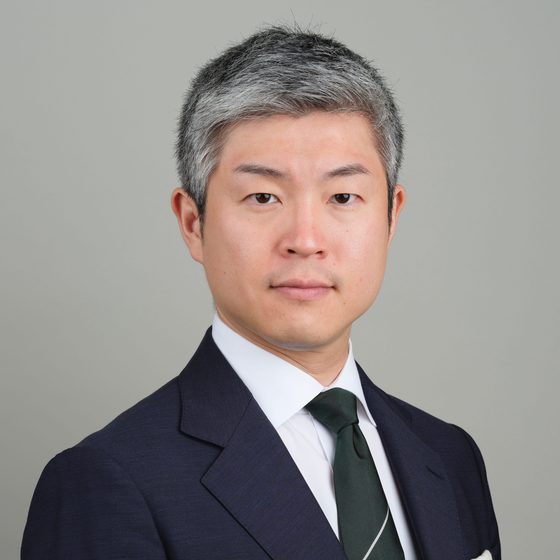
Shuhei Azuma was mayor of Shijōnawate, a city of 55,177 people in Osaka Prefecture (July 2026 figure, from the city’s own statistics portal), from January 2017 to the end of 2024. He was 28 when he won, the youngest sitting mayor in Japan at the time.
Asked why local governments are slow to adopt technology, he does not talk about procurement or politics. He talks about staffing. A small city hall has a fixed number of people, hired through a channel that has not changed in decades, and no practical way to bring in someone who has already done the job in question.
His first major decision as mayor was a job posting.
Before the city hall
Azuma completed a master’s degree in nuclear engineering at Kyoto University. In 2014 he joined Japan’s Ministry of Foreign Affairs, where he worked on multilateral economic partnership negotiations. He then moved to the India arm of a Japanese management consulting firm and worked on global strategy.
In January 2017 he stood for mayor of Shijōnawate, the city where he was born, and won.
Shijōnawate has no large tax base, no innovation district and no surplus of technical staff. In size and resources it is much closer to the median Japanese municipality than Tokyo or Osaka City is.
The job posting
In June 2017, five months into his first term, Azuma opened the position of deputy mayor to public application through a private-sector recruitment platform, seeking a woman for the role. en Japan, the recruitment company that ran the posting, described it as the first open public recruitment of its kind for a deputy mayor in the country and reported roughly 1,700 applicants.
Deputy mayors in Japan are normally either career staff who have risen through the organisation or appointees from the mayor’s own political network. Shijōnawate’s came from a field of about 1,700 people on a commercial job site.
The city went on to run open recruitment for ordinary staff as well, and moved job interviews online. For a mid-career professional in Tokyo, that took the trip to Osaka Prefecture out of the cost of applying.
What followed
Residents gained the ability to complete administrative procedures from a smartphone, including online applications for copies of residence records, a transaction that used to require a trip to a counter during working hours. The city was selected for the Cabinet Office’s programme supporting the social implementation of future technologies (未来技術社会実装事業) and pursued smart-city work including autonomous driving services. Over the same period the administration reduced municipal debt and built up the city’s reserve fund.
The debt reduction is the unusual part. Well-funded civic-tech pilots have a habit of improving a service and leaving the next administration paying for a system it never chose.
The succession experiment
Rather than leave the question of who would follow him to the ordinary political process, Azuma used a major private recruitment site to publicly seek and develop a candidate to stand in the next mayoral election. In December 2024, the candidate who emerged from that process, a former city staff member, won. Azuma’s own two terms ended after eight years.
The criticism came quickly. Kansai broadcasters put the objection to him directly: a mayor recruiting and grooming his own successor risks producing a copy of himself, which is not what an election is for. His answer was that the selection was decided by the deliberation of a political organisation rather than by him alone.
Behind the argument is a shortage that is not in dispute. Fewer people are willing and able to run a small Japanese municipality each year, as populations age and shrink. Azuma’s method, recruiting public leaders through the same open channels every other profession uses, is one response. Whether it is compatible with democratic accountability is a separate question.
Why he is on the T4IS roster
Azuma is now Executive Vice President at SLE Energy.
Technology for public problems ends up in a municipality sooner or later: the permits, the data, the sensors, the last mile of a climate, mobility or welfare programme. Japan has 1,718 municipalities by the Ministry of Internal Affairs and Communications’ count, and in budget and headcount most of them look more like Shijōnawate than like Tokyo.
Azuma ran one of them for eight years, changed who it could hire, and shipped the technology with the people that produced. His successor took office in December 2024 with the same open hiring channel available.
About Tech for Impact Summit
Tech for Impact Summit is an invitation-only executive gathering in Tokyo, convening leaders across business, policy, and culture to deploy high-impact technology against humanity’s most urgent crises. Shuhei Azuma is featured on the summit’s speaker roster for the 2026 edition. The next edition takes place May 18–19, 2027.
Explore the speaker roster or read our profile of Taro Kono on digital governance in Japan for the national-level counterpart to the municipal story above.
Attendance is by invitation. If you lead an organisation working at the intersection of technology and impact and would like to be considered for the 2027 gathering, you can register your interest — we review every submission personally.
Learn more at tech4impactsummit.com.
Sources: Shijōnawate City statistics portal (population); en Japan’s public-recruitment project coverage (deputy mayor and staff recruitment); Kansai Television reporting (successor recruitment and the criticism of it); Ministry of Internal Affairs and Communications (municipality count); Tech for Impact Summit speaker roster (current role and biography).