日本の洋上風力、史上最安値で三海域を落札した企業は、四年後にそれを返上した
三菱商事は2021年、日本初の洋上風力入札で三海域を独占落札し、2025年8月にその1.7GWすべてから撤退した。日本が作り直したのは風車ではなく入札制度だった。そこにこそ読むべきものがある。
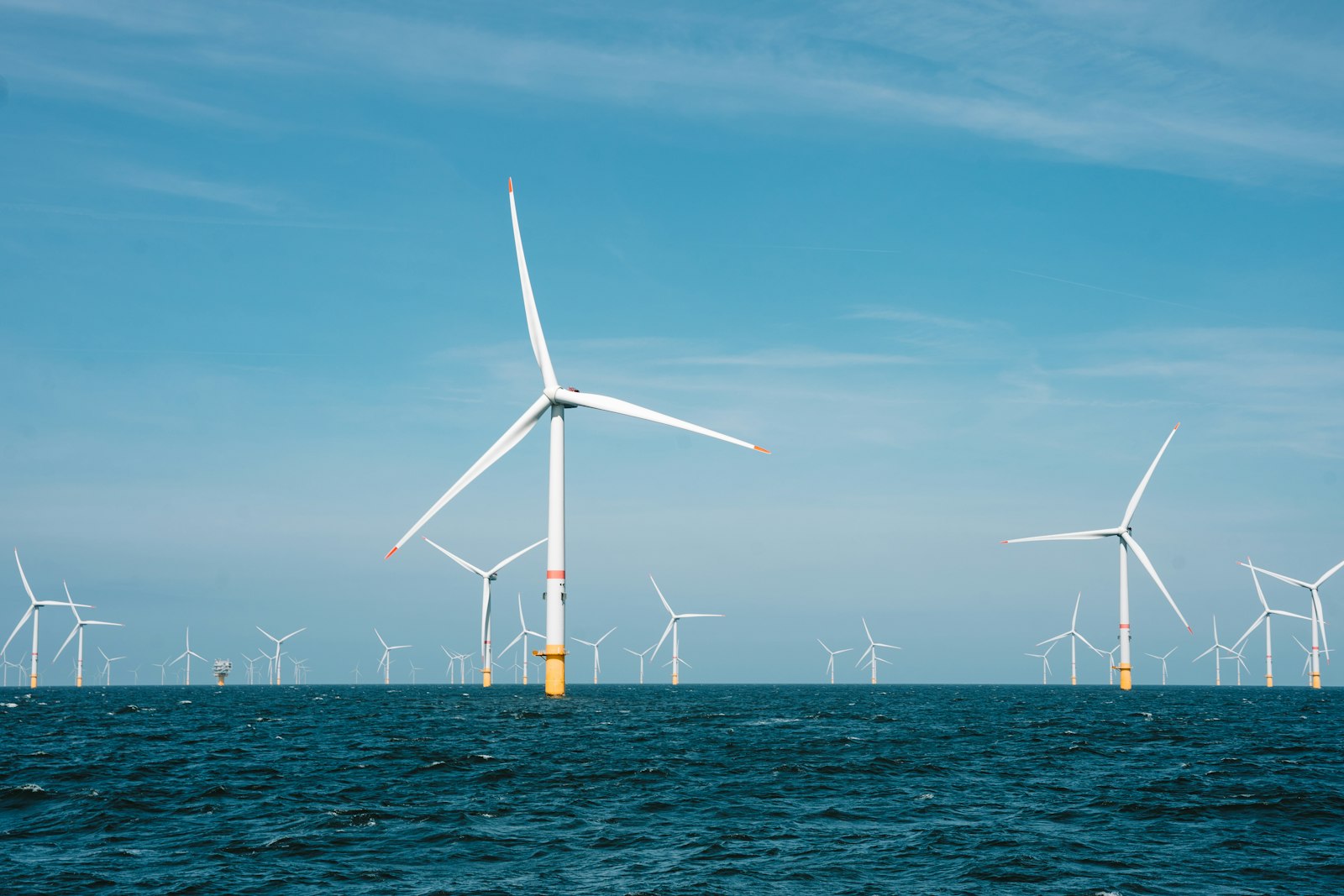
In December 2021, Japan awarded the three zones in its first fixed-bottom offshore wind auction. Consortia led by Mitsubishi Corporation won all three, on feed-in-tariff bids of ¥11.99 to ¥16.49 per kilowatt-hour (Westwood). It was a clean sweep, at prices well below what the rest of the field had offered.
On 27 August 2025, Mitsubishi announced it was withdrawing from all three.
Noshiro–Mitane–Oga in Akita, 479 MW. Yurihonjo, also Akita, 819 MW. Choshi in Chiba, 390 MW. Around 1.7 GW in total, the largest block of offshore wind Japan had ever allocated, returned to the state. Roughly ¥20 billion in security deposits went with it.
Between the award and the withdrawal, construction costs had more than doubled.
What a 2021 bid committed to
An offshore wind bid is a price for electricity delivered in the 2030s, made by a company that will not order most of its equipment for several years. The single number covers steel, vessels, cabling, labour and interest rates across a decade, and once accepted it is binding.
Mitsubishi filed that forecast in 2021. By the time it revisited the projects, the company put the cost increase at “more than doubled.”
The reasons it gave were not project-specific. In February 2025, booking an impairment of ¥52.2 billion — about $340 million — against the three sites, Mitsubishi described a business environment reshaped “due to factors such as inflation, the depreciation of the yen, tight supply chains and rising interest rates” (Maritime Executive). Six months later it walked.
Forfeiting ¥20 billion in deposits was cheaper than building at the new cost.
How Round 1 was scored
Japan’s Round 1 scoring rewarded low prices and speed. Bid the lowest number, promise the earliest commissioning date, win the zone.
A low price and an early date cost nothing to promise in 2021; the bill arrives around 2029. Scored that way, the auction favoured the most optimistic bidder, and Round 1 had no way to separate optimism from capability.
Fixed-bottom offshore wind is mature, and the turbines planned for Akita are the same ones going into the North Sea. What failed was the contract. It asked private companies to carry a decade of macroeconomic risk at a price fixed before the decade began, and ranked them by how much of that risk they would take.
What Japan changed
The government rewrote the auction rules. The changes are specific.
A price floor. The revised design sets a floor beneath which bids cannot go, and caps the scoring gap between floor and ceiling at 20 points, so price can no longer decide the outcome the way it did in 2021 (Shulman Advisory). Few procurement systems have a rule against bidding too low.
Less weight on speed. The emphasis on how fast a developer promises to deliver has been cut to roughly half its previous weight, replaced by a checklist-based qualitative assessment covering planning depth and domestic procurement (Aegir Insights).
Room to change the equipment. Developers may now revise key components, including turbines, where a supplier withdraws or costs escalate significantly. Round 1 winners had no such option.
Revenue that lasts longer than the build. Zero-premium projects from Rounds 2 and 3 can enter Japan’s Long-Term Decarbonization Power Source Auction, which carries twenty years of capacity revenue.
Tighter withdrawal rules.
The bill for getting it wrong
The three Mitsubishi zones are due to be re-auctioned, expected ahead of the Round 4 auction. Round 4 itself was postponed from 2025 so the reform could be finished, and Aegir Insights now expects it is “unlikely to launch before well into 2027.”
The reform costs Japan roughly two auction cycles. Aegir’s modelling puts the support level the re-bid zones would need at €79–91 per MWh to reach a 10% post-tax equity return, well above the 2021 bids.
Japan’s Vision for the Offshore Wind Power Industry, agreed in December 2020 and since carried into the Seventh Strategic Energy Plan, sets 10 GW by 2030 and 30–45 GW by 2040, with an August 2025 update adding at least 15 GW of floating capacity by 2040. Those are project-formation targets: capacity brought to the point of being auctioned, not capacity generating.
Operating offshore wind in Japan passed 500 MW in early 2026. DeepWind, reading GWEC’s forecast, puts installed capacity at around 3.5 GW by 2030, roughly a third of the formation target (DeepWind). The shortfall in that assessment comes from the distance between auction price assumptions and what developers will build for.
Two stories in one month
Unit 6 at Kashiwazaki-Kariwa resumed commercial operation on 16 April 2026, fourteen years after it went offline; the regulator had cleared units 6 and 7 as safe back in December 2017, and the eight years in between went on local consent. The offshore wind zones went four years from award to withdrawal before the auction rules were rewritten.
In both cases the technology was ready well before the contracts and consents around it. Japan’s carbon market and GX-ETS build-out is hitting a version of the same problem from the demand side.
Other jurisdictions running competitive renewable auctions have also seen bids withdrawn or repriced after macroeconomic conditions moved, and have found that record-low headline prices came with projects that could not be financed. Japan stands out for how quickly and how specifically it rewrote the rules afterwards. How to divide risk between a government that wants a fixed price and a developer that cannot fix its own costs is now an open design question for the next round everywhere.
Tech for Impact Summit 2027 will take up that question with senior people from capital, policy and industry, on deployment problems rather than demos. The summit runs 18–19 May 2027 in Tokyo, invitation-only.
If you are working on how climate infrastructure actually gets built and financed, we would like to invite you. You can join the waitlist to be considered for an invitation.