日本は核融合の期限を前倒しした。愛知のスーパーは、その電気の購入契約に署名した
改定されたフュージョンエネルギー・イノベーション戦略は、2030年代の発電実証を掲げる。三つの企業が、三つの異なる物理の賭けでそこを目指している。うち一社には、すでに買い手がいる。
On 10 December 2025, a regional supermarket chain in Aichi Prefecture announced that it had agreed to buy electricity from a fusion power plant that does not exist yet.
Aoki Super runs fifty stores, and like every grocery chain it runs them on refrigeration, lighting and climate control — a load that runs all day and all night. Its counterparty was Helical Fusion, a Tokyo company building a stellarator. Helical Fusion described the agreement as the first fusion-energy power purchase agreement ever signed in Japan (World Nuclear News). Aoki Super had already taken equity in the company that July.
It reads like a stunt. But fusion’s problem has never been only physics. An industry whose product is decades out has no customers, so it cannot price itself, and no utility plans around it. A supermarket chain putting its name to an offtake is a commercial milestone rather than a technical one. Japan produced it first.
The deadline moved
The context for that signature is a policy decision made eighteen months earlier.
Japan published its first Fusion Energy Innovation Strategy in April 2023 (Cabinet Office). On 4 June 2025 the government revised it. The revision’s stated aim, quoted by the Fusion Industry Association, is blunt for a policy document: “This Strategy is revised with the aim of demonstrating power generation in the 2030s, ahead of the rest of the world, and to establish a fusion industrial ecosystem.”
The date is aggressive, and everyone involved knows it. The phrase “industrial ecosystem” describes the actual strategy. Japan is betting less on a Japanese company reaching net power first than on whoever gets there needing superconducting magnets, tritium handling, blankets, heat exchangers and precision optics, and on those being built in Japan. It is a bet on an existing industrial base.
Three companies, three different physics
Japan’s private fusion sector has not consolidated around one approach. Three companies are pursuing different physics, and all three have moved in the last twelve months.
Kyoto Fusioneering and the FAST project. FAST is a low-aspect-ratio tokamak led by Starlight Engine with Kyoto Fusioneering, and in November 2025 the project published its conceptual design report — Japan’s first private-sector-led conceptual design for a fusion power demonstration, completed about a year after the project launched. The design targets roughly 50 MW of fusion output, with an engineering design report due in 2028 and construction beginning after that (Kyoto Fusioneering). Kyoto Fusioneering itself is not principally a reactor company; it makes the equipment that sits between a fusion plasma and a working plant, which is the industrial-ecosystem strategy in corporate form.
Helical Fusion. The stellarator bet, descended from Japan’s Large Helical Device programme. Its case is that a stellarator’s steady-state operation suits a power plant better than a pulsed tokamak, at the cost of far harder magnet geometry. It raised a ¥2.3 billion (about $15.6 million) Series A in July 2025, bringing total capital including grants and loans to ¥5.2 billion (American Nuclear Society), and extended that round by a further $5.5 million in December. Its roadmap runs through component demonstrations in the mid-2020s to an integrated demonstration device in the 2030s, and then to Helix KANATA, the plant Aoki Super has contracted to buy from.
EX-Fusion. The laser bet, spun out of Osaka University in July 2021 and still housed in the university’s Techno-alliance building. Its work is on high-power laser control, target delivery and blankets for inertial fusion. JX Advanced Metals took shares in the company’s Series A extension in October 2025, listing EX-Fusion’s capital at ¥1.239 billion (JX Advanced Metals). Osaka has been doing laser fusion research since long before it was fashionable.
Kyoto Fusioneering’s COO, Kiyoshi Seko, and EX-Fusion’s co-founder and CEO, Kazuki Matsuo, were both on the programme at Tech for Impact Summit 2026 in Tokyo.
What still has to be true
Three things have to go right that have not yet.
Tritium. Deuterium-tritium reactors consume a fuel that barely exists in nature and must be bred inside the machine, in lithium blankets, faster than it decays and faster than it is burned. No plant has ever closed that cycle at power-plant scale. Every 2030s timeline in the world assumes this problem yields. It is the assumption most likely to move dates.
Materials. The first wall of a fusion device absorbs a neutron flux that degrades metals at the atomic level, continuously, for the machine’s operating life. Testing candidate materials properly requires a neutron source at conditions that mostly do not exist yet.
Capital scale. Japan’s private fusion companies are capitalised in the tens of millions of dollars. Their American and British counterparts are capitalised in the hundreds of millions to billions. If the components strategy holds, Japan does not need to match that number, because it can sell into everyone else’s programmes. If it does not hold, the gap is the problem.
“Demonstrating power generation” is not the same as supplying power. A demonstration can mean producing electricity for a period under controlled conditions. Between that and a grid-connected plant selling to a supermarket chain lies licensing, insurance, a regulatory regime for fusion that most countries including Japan are still drafting, and a cost per megawatt-hour nobody can yet quote. The 2030s date is for the first thing, not the second. The two will get mixed up constantly over the next decade.
What changed
Fusion has been twenty years away for sixty years, and it is fair to ask what changed. Part of the answer is technical: high-temperature superconducting tape made compact, high-field magnets possible, which changed the size and cost of a plausible machine. Part of it is capital: private money entered a field that had been the exclusive property of state programmes.
The part that changed most recently is demand. Electricity consumption forecasts have been rewritten around AI data centres, and utilities are now planning for load growth after two decades of flatness in most developed economies. Tech for Impact Summit published on that collision in March 2026, in AI’s Insatiable Grid. The forecasts vary widely and should be treated with suspicion; the direction is what matters for fusion. Its standing objection used to be that clean electricity was already cheap and nobody needed more of it. That objection is weaker in a decade where the constraint is firm, dispatchable supply that does not emit.
Which is why the Aoki Super agreement matters more than any of the funding rounds above. A supermarket signing a fusion PPA has decided that its 2030s electricity is worth locking in now. Whether it is right is easier to judge in a room that contains the people building the machines, the people financing them, and the people who will have to regulate them.
Tech for Impact Summit 2027 takes place in Tokyo on 18–19 May 2027. T4IS is an invitation-only executive summit, convening leaders across business, policy and capital around technology aimed at the world’s most urgent problems — energy and climate among them.
If you are building, funding, or regulating in this space, you can join the 2027 waitlist at tech4impactsummit.com/apply.
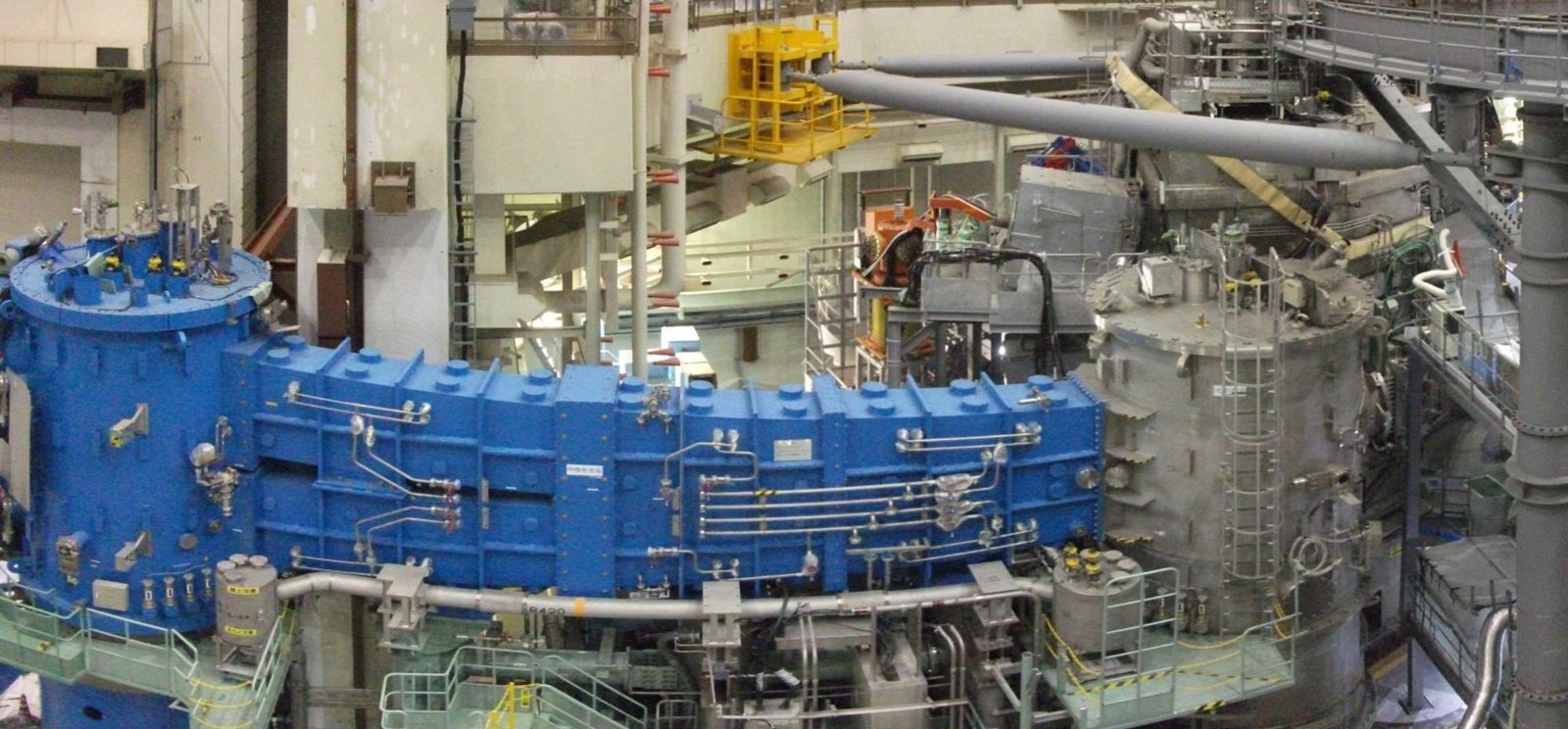
Header image: the JT-60SA tokamak hall in Naka, Japan, September 2016. Photo by Michel Maccagnan, CC BY-SA 4.0, via Wikimedia Commons, cropped.
